Category: News

Parent category of all content that could be considered as news (as opposed to blog)

  • August 2018 Trail and Road Conditions

    August 2018 Trail and Road Conditions

    Trail Conditions Update – August 30, 2018

    WILDFIRES: Fire hazard ratings have reduced in the Rockies. Rain has improved the air quality somewhat but smoke and haze may be present in valleys due to forest fires burning near the GDT.

    • SECTION A TRAIL CLOSURE: Due to the Boundary wildfire, the GDT is closed from the International Boundary (a1) to Bertha Bay campground. 
    • SECTION A RE-OPENED: The GDT has re-opened from Sage Pass (a17) to Castle Mountain Resort (a30). 
    • SECTION C TRAIL RE-OPENED: The GDT has re-opened from Ball Pass (c22) to Tumbling Pass (c30). 

    CAMPFIRE BANS: Campfire bans are in effect for all portions of the GDT in BC. Fire Advisories are in effect for Waterton Lakes, Banff, Kootenay, Yoho and Jasper National Parks where campfires are only allowed in metal fire pits or boxes provided by Parks Canada. No random fires are allowed in these parks. 

    BEARS: It’s berry season! Berry bushes border trails, roads and campgrounds on the GDT, and black and grizzly bears are feeding on berries right now. Be bear aware on the trails this summer: be alert, make noise and carry bear spray.

    • BANFF NATIONAL PARK and PETER LOUGHEED PROVINCIAL PARK: A defensive grizzly bear feeding on a carcass in the Burstall Pass area was involved in a contact encounter causing human injury. Extra caution is recommended when travelling in this area. Burstall Pass access trail is closed.
    • KAKWA PROVINCIAL PARK: August 28 – An animal carcass was found on the Kakwa Pass Trail at 53.959141, -120.137961. Hikers should avoid this area and stay north near this location when hiking through. Make noise and carry bear spray along the trail.

    TRAIL CLOSURES:

    • Due to last year’s Kenow wildfire and the existing Boundary wildfire, some trails and backcountry campgrounds in Waterton Lakes National Park and Akamina Kishinena Provincial Park are closed. The GDT is closed from the International Boundary (a1) to Sage Pass (a17).  
    • Trail 7 near Jasper is closed to hikers south of the junction with Trail 4g and north of the junction with Trail 7a due to a grizzly bear attack in the area. Detour by taking Trail 4d to Edith Lake from where you can take several different trails (4, 4a, 4d, 7b) to reach Old Fort Point trailhead. Equestrians can still use Trail 7 but are not to dismount.
    • Numa Creek Trail (Rockwall access trail) remains closed due to wash out of the bridge over the Vermilion River. The pedestrian bridge is being replaced and will be installed in fall 2018. Numa Creek Trail will be cleared in spring 2019 and access to the Rockwall from this location will be restored for mid-summer 2019.
    • The Elysium Pass, Virl, Dorothy and Christine Lakes trailhead is closed during construction of the Meadow Creek Bridge, expected to continue until November 2018. During this time, the Marjorie-Dorothy Lakes Alternate Route and Elysium Pass Alternate Route will not be accessible from this trailhead.

    TRAIL NOTICES:

    Trail conditions are generally good but expect some wet and muddy sections during periods of rain. Warm weather means rapid melt during the day resulting in high water levels and potentially dangerous creek crossings, so attempt to ford larger creeks early in the day when water levels are lowest.

    • In 2017, approximately 35 km of the GDT was burned by the Kenow Wildfire between Bertha Bay campground and Font Creek (a19). Some trails that have been damaged by wildfire may require environmental analysis or heavier engineering, and closures could be in place for many months, for the health of the trail and the surrounding landscapes as well as the safety of hikers, park staff and volunteers. The GDTA will continue to monitor and assess the condition of these damaged trails and provide updates as they become available. 
    • From Scarpe Pass (a24), the trail disappears so hikers must route-find up to La Coulotte Ridge, where the hiking becomes significantly more difficult until you reach the ATV track (a27) heading down to the West Castle Road. 
    • A large avalanche has destroyed about 200m of trail north of Dutch Creek campground, near Tornado Pass (b16). A detour route has been flagged starting at 49.920405N, 114.667765W
      and intersecting with the GDT again at 49.957641N, 114.658199W, just below Tornado Saddle. 
    • Leroy Creek has washed out approximately 100m of the trail obscuring the location of the creek ford. Look for cairns on either side of the creek marking the crossing.
    • A windstorm blew through Yoho National Park in July 2017 resulting in many blown down trees. The Ottertail Trail was cleared in August 2018, but there may still be some debris on the trail near Goodsir Pass but these are fairly easy to get around.
    • The first kilometre of the Amiskwi Trail was cleared in August 2018, but the rest of the Amiskwi Trail is in poor shape much of the way to Amiskwi Pass. Expect brushy, overgrown conditions, poor or non-existent trail requiring some route-finding, and wet fords of the Amiskwi River. 
    • Cairnes Creek (d9): The bridge is washed out making this a potentially dangerous ford. There are two large trees down across the creek allowing hikers to cross. If these trees wash away, it is recommended to ford the creek early in the morning when glacial melt is lowest.
    • The damaged Lambe Creek bridge (d10) washed away in 2015. A small piece of the old bridge and a temporary log bridge allow hikers to cross. If the temporary bridge washes away, it is recommended to ford downstream where the creek is wider and shallower, and cross early in the morning when glacial melt is lowest.
    • The Howse Pass Trail from Conway Creek (d12) to the Glacier Lake trail junction (d14) is in very poor condition. The trail is overgrown, with hundreds of wind-fallen trees across the trail. Hiking in the Howse River floodplain is highly recommended when the river is low enough to safely ford.
    • Parks Canada has advised that GDT hikers are able to hike through the Mistaya Canyon/Howse Pass trailhead during the parking lot closure as long as the closed area is avoided.
    • The Owen Creek Trail was cleared in July 2015 up to km 6 but there has been some new deadfall since then. Beyond that point, the trail is in poor shape with several washed out sections. Expect challenging hiking for 3 km including skirting along steep creek-side cliffs and rock-hopping in the creek itself. At km 6, do not take the trail heading up away from the creek (it is a deadend). Look for orange blazes marking the correct route staying near the creek.
    • The Maligne Pass trail from Pobokton Creek (e20) to Trapper Creek (e24) is no longer being maintained by Parks Canada so expect deteriorating and overgrown trail conditions; long pants are recommended. The Maligne River bridge has been removed but the river can be easily forded in normal summer conditions (knee deep in mid-summer). Most other bridges are still in place. The Six Passes Route is a cross-country alternative to the overgrown trail for hikers with route-finding experience.
    • The Yates Torrent Bridge is out at the crossing of the Coleman Glacier outflow (near f16). Do not attempt to cross at the old bridge location. There are two options: (1) ford the Smoky River in the floodplain; or (2) ford Yates Torrent approximately 500m upstream (location was flagged in 2017). At both locations attempt to cross early in the morning when glacial melt is the lowest or be prepared for a fast and potentially dangerous creek ford.
    • The bridges across Gendarme and Carcajou Creeks are out on the Jasper North Boundary Trail. These two creeks are smaller than the Smoky River, but can still be treacherous. Cross Gendarme at the horse crossing just below the old bridge (marked), and Carcajou about 100m below the trail.
    • Hikers have reported that Wolverine campground and the surrounding trail are flooded. Detour around by following higher ground through the forest west of the trail and campground.
    • The bridge across Buchanan Creek on the trail to Kakwa Lake, has been removed. The crossing here can be hazardous early in the year or after heavy rains. 

    ACCESS ROADS: 

    • Akamina Parkway and Red Rock Parkway in Waterton Lakes National Park are closed.
    • Due to wildfire and smoke in the area, Highway 93 may be closed intermittently between Castle Junction and Radium.
    • The Walker Creek Forestry Road is driveable to the Kakwa trailhead but a high clearance 4WD vehicle is recommended. A washout at km 66 may be impassable to non 4WD vehicles.
    • For more information on road conditions, check out Alberta 511 and Drive BC.
  • July 2018 Trail and Road Conditions

    July 2018 Trail and Road Conditions

    Trail Conditions Update – July 27, 2018

    Alpine wildflowers are blooming! Trail conditions are generally good but expect some wet and muddy sections and a few snow patches lingering at higher elevations. Warm weather means rapid snow melt during the day resulting in high water levels and potentially dangerous creek crossings, so attempt to ford larger creeks early in the day when water levels are lowest.

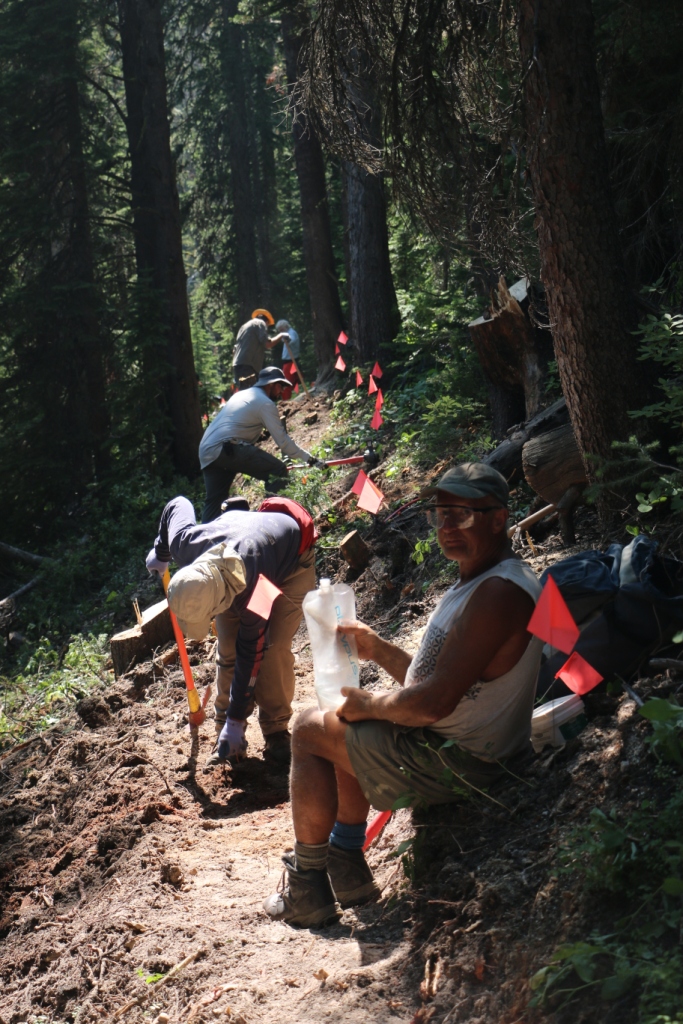
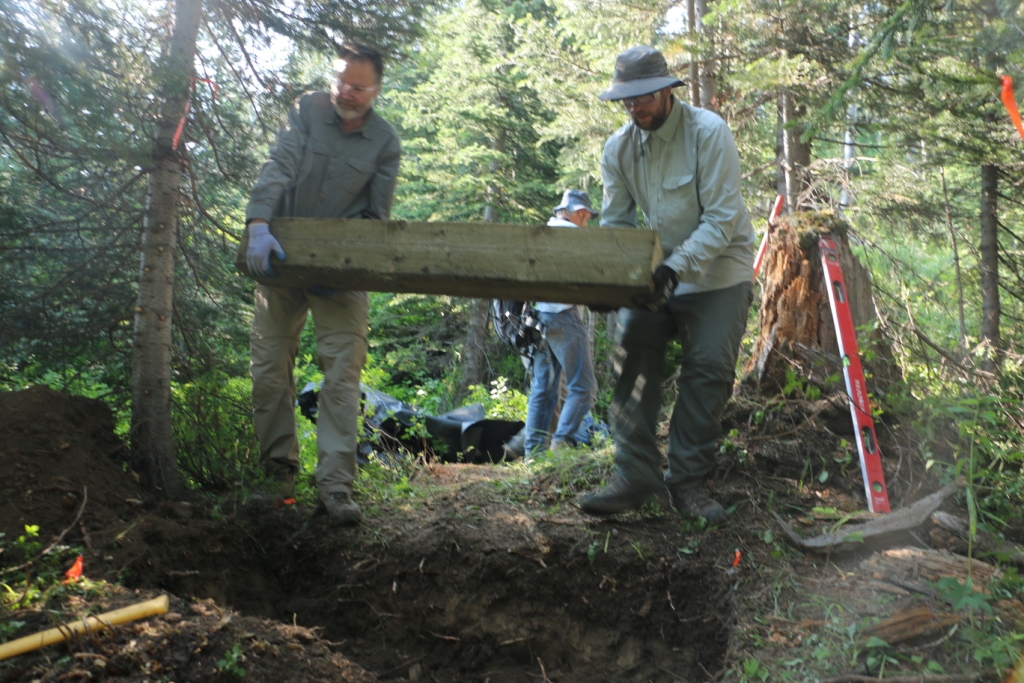
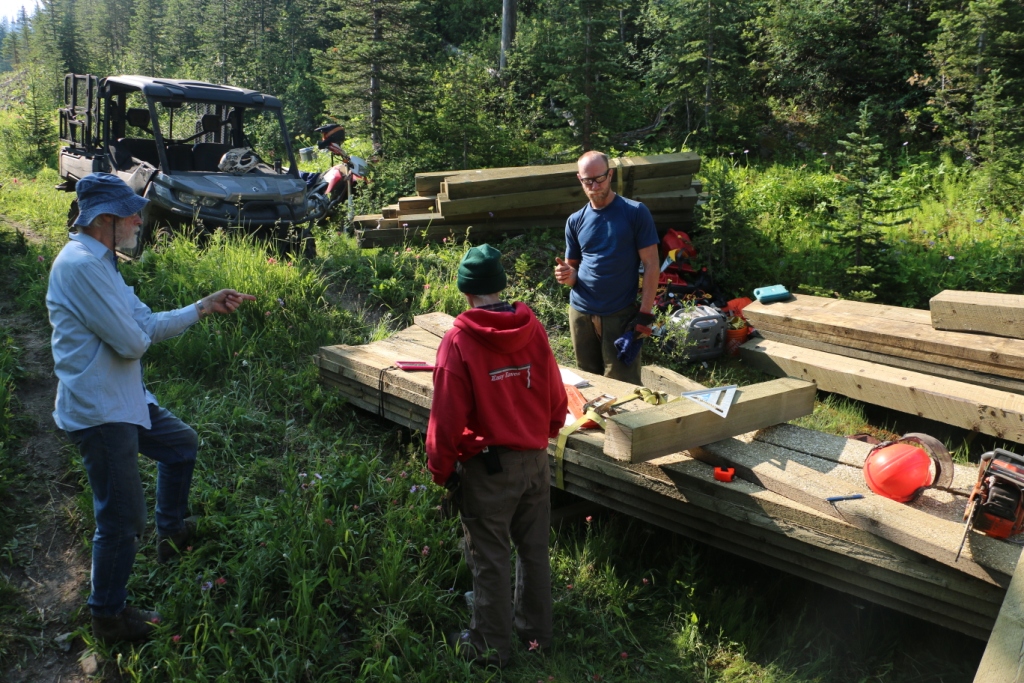
    Trail crews are out maintaining the GDT in July so make your presence known when hiking through a work area and say thanks for all their hard work!

    BEARS: Bears are out and about! Be bear aware on the trails this summer: be alert, make noise and carry bear spray.

    CAMPFIRE BANS: Fire hazard ratings are high or extreme in the Rockies and smoke/haze may be present in valleys due to forest fires burning some distance away from the GDT. A campfire ban is in effect for all portions of the GDT in BC from Sage Pass (a17) to Howse Pass (d11). A Fire Advisory is in effect in Alberta from Waterton (a1) to North Kananaskis Pass (c3). If you must have a campfire in the backcountry elsewhere, ensure you follow the rules.

    TRAIL CLOSURES:

    • Due to last year’s Kenow wildfire, many trails and backcountry campgrounds in Waterton Lakes National Park and Akamina Kishinena Provincial Park remain closed. The GDT is closed from the Carthew-Alderson trail junction (a3) to Sage Pass (a17). The Waterton Lakeshore Trail has re-opened (a1 to a3) but since the remaining portions of the GDT within Waterton Lakes National Park remain closed, Font Creek Trail is the Alternate Southern Terminus of the GDT.
    • Trail 7 near Jasper is closed to hikers south of the junction with Trail 4g and north of the junction with Trail 7a due to a grizzly bear attack in the area. Detour by taking Trail 4d to Edith Lake from where you can take several different trails (4, 4a, 4d, 7b) to reach Old Fort Point trailhead. Equestrians can still use Trail 7 but are not to dismount.
    • Numa Creek Trail (Rockwall access trail) remains closed due to wash out of the bridge over the Vermilion River. The pedestrian bridge is being replaced and will be installed in fall 2018. Numa Creek Trail will be cleared in spring 2019 and access to the Rockwall from this location will be restored for mid-summer 2019.
    • The Elysium Pass, Virl, Dorothy and Christine Lakes trailhead is closed during construction of the Meadow Creek Bridge, expected to continue until November 2018. During this time, the Marjorie-Dorothy Lakes Alternate Route and Elysium Pass Alternate Route will not be accessible from this trailhead.

    TRAIL NOTICES:

    • In 2017, approximately 35 km of the GDT was burned by the Kenow Wildfire between Bertha Bay campground and Font Creek (a19). Some trails that have been damaged by wildfire may require environmental analysis or heavier engineering, and closures could be in place for many months, for the health of the trail and the surrounding landscapes as well as the safety of hikers, park staff and volunteers. The GDTA will continue to monitor and assess the condition of these damaged trails and provide updates as they become available. For 2018, Font Creek Trail is the Alternate Southern Terminus of the GDT.
    • The Waterton Lakeshore Trail has re-opened making it is possible to hike from the International Boundary to Font Creek Trail via a connection of trails, roads and seismic lines but it will involve some route-finding and bushwhacking. Turn on the Access Routes layer on the GDT map to view this proposed “Waterton Detour” route.
    • From Scarpe Pass (a24), the trail disappears so hikers must route-find up to La Coulotte Ridge, where the hiking becomes significantly more difficult until you reach the ATV track (a27) heading down to the West Castle Road. 
    • A large avalanche has destroyed about 200m of trail north of Dutch Creek campground, near Tornado Pass (b16). A detour route has been flagged starting at 49.920405N, 114.667765W
      and intersecting with the GDT again at 49.957641N, 114.658199W, just below Tornado Saddle. 
    • Leroy Creek has washed out approximately 100m of the trail obscuring the location of the creek ford. Look for cairns on either side of the creek marking the crossing.
    • A windstorm blew through Yoho National Park in July 2017 resulting in many blown down trees. On the Ottertail Trail, there are several debris fields with fallen trees across the trail near Goodsir Pass (c36) but these are fairly easy to get around. On the Amiskwi Trail, about 1 km from the trailhead (d1), there are dozens of trees blow down across the trail that are more challenging to get around.
    • Cairnes Creek (d9): The bridge is washed out making this a potentially dangerous ford. There are two large trees down across the creek allowing hikers to cross. If these trees wash away, it is recommended to ford the creek early in the morning when glacial melt is lowest.
    • The damaged Lambe Creek bridge (d10) was removed in September 2015. It is recommended to ford downstream where the creek is wider and shallower, and cross early in the morning when glacial melt is lowest.
    • The Howse Pass Trail from Conway Creek (d12) to the Glacier Lake trail junction (d14) is in very poor condition. The trail is overgrown, with hundreds of wind-fallen trees across the trail. Hiking in the Howse River floodplain is highly recommended when the river is low enough to safely ford.
    • Parks Canada has advised that GDT hikers are able to hike through the Mistaya Canyon/Howse Pass trailhead during the parking lot closure as long as the closed area is avoided.
    • The Owen Creek Trail was cleared in July 2015 up to km 6 but there has been some new deadfall since then. Beyond that point, the trail is in poor shape with several washed out sections. Expect challenging hiking for 3 km including skirting along steep creek-side cliffs and rock-hopping in the creek itself. At km 6, do not take the trail heading up away from the creek (it is a deadend). Look for orange blazes marking the correct route staying near the creek.
    • The Maligne Pass trail in Jasper National Park has been decommissioned and is in poor shape. The trail from Pobokton Creek (e20) to Maligne Lake (e25, approx 42 km) is no longer being maintained by Parks Canada so expect deteriorating and overgrown trail conditions; long pants are recommended. The Maligne River bridge has been removed but the river can be easily forded in normal summer conditions (knee deep in mid-summer). Most other bridges are still in place. The Six Passes Route is a cross-country alternative to the overgrown trail.
    • The Yates Torrent Bridge is out at the crossing of the Coleman Glacier outflow (near f16). Do not attempt to cross at the old bridge location. There are two options: (1) ford the Smoky River in the floodplain; or (2) ford Yates Torrent approximately 500m upstream (location was flagged in 2017). At both locations attempt to cross early in the morning when glacial melt is the lowest or be prepared for a fast and potentially dangerous creek ford.
    • The bridges across Gendarme and Carcajou Creeks are out on the Jasper North Boundary Trail. These two creeks are smaller than the Smoky River, but can still be treacherous. Cross Gendarme at the horse crossing just below the old bridge (marked), and Carcajou about 100m below the trail.
    • The public cabin at Kakwa Lake will be closed for public use from July 31 – August 2, 2018 for conservation work being conducted in the park. 
    • The bridge across Buchanan Creek on the trail to Kakwa Lake, has been removed. The crossing here can be hazardous early in the year or after heavy rains. 

    ACCESS ROADS: 

    • Akamina Parkway and Red Rock Parkway in Waterton Lakes National Park are closed.
    • July 2018 – A washout occurred around km 66 of the Walker Creek Forestry Road which may be impassable to vehicles. There are no plans for repair this year but possibly in 2019. Overgrown brush past km 60 may be a particular concern for drivers. High clearance 4WD vehicles required.
    • For more information, check out Alberta 511 and Drive BC.
  • June 2018 Trail and Road Conditions

    June 2018 Trail and Road Conditions

    Trail Conditions Update – June 27, 2018

    It’s transition time on the GDT. Valley bottom trails at lower elevations vary from bare and dry to wet and muddy, while many trails at higher elevation are still snow covered. With warmer weather, trail conditions can change quickly so plan for varying conditions – boots, cleats and/or poles are recommended. 

    SNOW: For up to date snow level data in BC, check out the Snow Survey and Water Supply Bulletins or the Automated Snow Weather Station Map. In Alberta, check out the Alberta River Basins map (turn on the snow pillow layer).

    CREEKS: Rapid snow melt during this time of year results in high water levels and potentially dangerous creek crossings, particularly later in the day. Attempt to ford larger creeks early in the day when water levels are lowest.

    ELK CALVING SEASON: May 15 to June 30. Protective mother elk will aggressively protect their newborns by kicking and charging at people. Stay at least 30 metres away from all elk during this time of year. Pay attention to trail closures in known elk calving areas.

    TICKS: Tick season has started. Long pants tucked into your socks are recommended. Be extra careful when in areas with a lot of underbrush and check yourself and your clothing after your hike.

    BEARS: With spring’s arrival, bears are leaving their dens in search of food. Be bear aware on the trails this spring, make noise and carry bear spray.

    CAMPFIRE BANS: Currently the only campfire ban on the GDT is within Jasper National Park. Elsewhere if you must have a campfire in the backcountry, ensure you follow the rules.

    TRAIL CLOSURES:

    • Due to the Kenow wildfire, many trails and backcountry campgrounds in Waterton Lakes National Park and Akamina Kishinena Provincial Park remain closed. The GDT is closed from the Carthew-Alderson trail junction (a3) to Sage Pass (a17). The Lakeshore Trail has re-opened but since the remaining portions of the GDT within Waterton Lakes National Park remain closed, Font Creek Trail is the Alternate Southern Terminus of the GDT in 2018.
    • Trail 7 near Jasper is closed to hikers south of the junction with Trail 7e and north of the junction with Trail 7a due to grizzly and black bears frequenting the area next to the golf course. Detour by taking Trail 7e towards Trefoil Lakes and Trail 7b south to Old Fort Point trailhead. Equestrian uses can still use Trail 7 but are not to dismount.
    • Numa Creek Trail (Rockwall access trail) remains closed due to wash out of the bridge over the Vermilion River. The pedestrian bridge is being replaced with an estimated opening date in August 2018. 
    • Tumbling Creek Trail (Rockwall access trail) is closed from the Ochre Creek trail to the intersection of the Rockwall Trail before the Tumbling bridge due to a missing bridge at km 6.6.
    • The Elysium Pass, Virl, Dorothy and Christine Lakes trailhead is closed during construction of the Meadow Creek Bridge, expected to continue until November 2018. During this time, the Marjorie-Dorothy Lakes Alternate Route and Elysium Pass Alternate Route will not be accessible from this trailhead.

    TRAIL NOTICES:

    • Approximately 35 km of the GDT was burned by the Kenow Wildfire between Bertha Bay campground and Font Creek (a19). Some trails that have been damaged by wildfire may require environmental analysis or heavier engineering, and closures could be in place for many months, for the health of the trail and the surrounding landscapes as well as the safety of hikers and volunteers. The GDTA will continue to monitor and assess the condition of these damaged trails and provide updates as they become available. The Lakeshore Trail has re-opened but since the remaining portions of the GDT within Waterton Lakes National Park remain closed, Font Creek Trail is the Alternate Southern Terminus of the GDT in 2018.
    • From Scarpe Pass (a24), the trail disappears so hikers must route-find up to La Coulotte Ridge, where the hiking becomes significantly more difficult until you reach the ATV track (a27) heading down to the West Castle Road. 
    • A large avalanche has destroyed about 200 m of trail north of Dutch Creek campground, near Tornado Pass (b16). Hikers should traverse the scar area around the down slope side so as to avoid climbing over unstable fallen trees.
    • Leroy Creek has washed out approximately 100m of the trail obscuring the location of the creek ford. Look for cairns on either side of the creek marking the crossing.
    • A windstorm blew through Yoho National Park in July 2017 resulting in many blown down trees. On the Ottertail Trail, there are several debris fields with fallen trees across the trail near Goodsir Pass (c36) but these are fairly easy to get around. On the Amiskwi Trail, about 1 km from the trailhead (d1), there are dozens of trees blow down across the trail that are more challenging to get around.
    • Cairnes Creek (d9): The bridge is washed out making this a potentially dangerous ford. There are 2 large trees down across the creek allowing hikers to cross. If these trees wash away, it is recommended to ford the creek early in the morning when glacial melt is lowest.
    • The damaged Lambe Creek bridge (d10) was removed in September 2015. It is recommended to ford downstream where the creek is wider and shallower, and cross early in the morning when glacial melt is lowest.
    • The Howse Pass Trail from Conway Creek (d12) to the Glacier Lake trail junction (d14) is in very poor condition. The trail is overgrown, with hundreds of wind-fallen trees across the trail. Hiking in the Howse River floodplain is highly recommended when the river is low enough to safely ford.
    • The Owen Creek Trail was cleared in July 2015 up to km 6 but there has been some new deadfall since then. Beyond that point, the trail is in poor shape with several washed out sections. Expect challenging hiking for 3 km including skirting along steep creek-side cliffs and rock-hopping in the creek itself. At km 6, do not take the trail heading up away from the creek (it is a deadend). Look for orange blazes marking the correct route staying near the creek.
    • The Maligne Pass trail in Jasper National Park has been decommissioned and is in poor shape. The trail from Pobokton Creek (e20) to Maligne Lake (e25, approx 42 km) is no longer being maintained by Parks Canada so expect deteriorating and overgrown trail conditions; long pants are recommended. The Maligne River bridge has been removed but the river can be easily forded in normal summer conditions (knee deep in mid-summer). Most other bridges are still in place. The Six Passes Route is a cross-country alternative to the overgrown trail.
    • The Yates Torrent Bridge is out at the crossing of the Coleman Glacier outflow (near f16). Do not attempt to cross at the old bridge location. There are two options: (1) ford the Smoky River in the floodplain; or (2) ford Yates Torrent approximately 500m upstream (location was flagged in 2017). At both locations attempt to cross early in the morning when glacial melt is the lowest or be prepared for a fast and potentially dangerous creek ford.
    • The bridges across Gendarme and Carcajou Creeks are out on the Jasper North Boundary Trail. These two creeks are smaller than the Smoky River, but can still be treacherous. Cross Gendarme at the horse crossing just below the old bridge (marked), and Carcajou about 100m below the trail.
    • The bridge across Buchanan Creek on the trail to Kakwa Lake, has been removed. The crossing here can be hazardous early in the year or after heavy rains. 

    ACCESS ROADS: 

    • Akamina Parkway and Red Rock Parkway in Waterton Lakes National Park are closed.
    • For more information, check out Alberta 511 and Drive BC.
  • Winter 2017/18 Trail and Road Conditions

    Winter 2017/18 Trail and Road Conditions

    Trail Conditions Update – November 13, 2017

    Winter is here. Snow has fallen on all of the GDT and is accumulating so expect wet, icy and slippery trail conditions. Heavy boots, snow cleats or snowshoes are recommended. Temperatures are below freezing, so be prepared for winter conditions and short days when travelling into the backcountry this winter.

    Remember that the GDT is not designed for snow travel and is not maintained in the winter. When the trail is covered in snow, finding it may be impossible so excellent navigation skills are required. Hiking on the GDT when it’s snow covered means exposing yourself to potential avalanche risk. In many places, it’s unwise to travel the trail during these conditions. While planning your hike, research snow conditions and check out the Canadian Avalanche Centre for the latest avalanche bulletins

    TRAIL CLOSURES:

    • Due to the Kenow wildfire, all trails and backcountry campgrounds in Waterton Lakes National Park and Akamina Kishinena Provincial Park remain closed. The GDT is closed from the International Boundary (a1) to Sage Pass (a17). No detour is available.
    • Due to the Verdant Creek Wildfire, the GDT is closed from Citadel Pass (c13) to Sunshine Meadows (c15). Detour around the closure by leaving the GDT at Watridge Lake trail junction (c7) and rejoin the GDT at Sunshine Village (c15). 
    • Jasper National Park seasonal closure – The GDT is closed from Four Point Campground (e15) to Signal Mountain Trailhead (e32) from November 1, 2017 to February 28, 2018, to prevent trails from facilitating an unnatural level of predator access to threatened woodland caribou.
    • Numa Creek Trail (Rockwall access trail) remains closed due to wash out of the bridge over the Vermilion River. 
    • Tumbling Creek Trail (Rockwall access trail) is closed from the Ochre Creek trail to the intersection of the Rockwall Trail before the Tumbling bridge due to a missing bridge at km 6.6.

    TRAIL NOTICES:

    • Approximately 35 km of the GDT was burned by the Kenow Wildfire between Bertha Bay campground and Font Creek (a19). We will have to wait until next summer to determine the full extent of the damage. Some trails that have been damaged by wildfire may require environmental analysis or heavier engineering, and closures could be in place for many months, for the health of the trail and the surrounding landscapes as well as the safety of hikers and volunteers. The GDTA will continue to monitor and assess the condition of these damaged trails and provide updates as they become available.
    • From Scarpe Pass (a24), the trail disappears so hikers must route-find up to La Coulotte Ridge, where the hiking becomes significantly more difficult until you reach the ATV track (a27) heading down to the West Castle Road. 
    • A large avalanche has destroyed about 200 m of trail north of Dutch Creek campground, near Tornado Pass (b16). Hikers should traverse the scar area around the down slope side so as to avoid climbing over unstable fallen trees.
    • Leroy Creek has washed out approximately 100m of the trail obscuring the location of the creek ford. Look for cairns on either side of the creek marking the crossing.
    • There is a new bridge over the Upper Elk Lake outflow (b38) and a new bypass trail to Fox Lake and West Elk Pass just before the bridge.
    • A windstorm blew through Yoho National Park in July 2017 resulting in many blown down trees – On the Ottertail Trail, there are several debris fields with fallen trees across the trail near Goodsir Pass (c36). On the Amiskwi Trail, about 1 km from the trailhead (d1), there are dozens of trees blow down across the trail.
    • Cairnes Creek (d9): The bridge is washed out making this a potentially dangerous ford. There are 2 large trees down across the creek allowing hikers to cross. If these trees wash away, it is recommended to ford the creek early in the morning when glacial melt is lowest.
    • The damaged Lambe Creek bridge (d10) was removed in September 2015. It is recommended to ford downstream where the creek is wider and shallower, and cross early in the morning when glacial melt is lowest.
    • The Howse Pass Trail from Conway Creek (d12) to the Glacier Lake trail junction (d14, 15 km) is in very poor condition. The trail is overgrown, with hundreds of wind-fallen trees across the trail. Hiking in the Howse River floodplain is recommended when the river is low enough to safely ford.
    • The Owen Creek Trail was cleared in July 2015 up to km 6 but there has been some new deadfall since then. Beyond that point, the trail is in poor shape with several washed out sections. Expect challenging hiking for 3 km including skirting along steep creek-side cliffs and rock-hopping in the creek itself. At km 6, do not take the trail heading up away from the creek (it is a deadend). Look for orange blazes marking the correct route staying near the creek.
    • The Maligne Pass trail in Jasper National Park has been decommissioned and is in poor shape. The trail from Pobokton Creek (e20) to Maligne Lake (e25, approx 42 km) is no longer being maintained by Parks Canada so expect deteriorating and overgrown trail conditions; long pants are recommended. The Maligne River bridge has been removed but the river can be easily forded in normal summer conditions (knee deep in mid-summer). Most other bridges are still in place. Read Nathan Dahl’s August 30, 2015 Maligne Pass trail update here. The Six Passes Route is a good alternative to the overgrown trail.
    • The Yates Torrent Bridge is out at the crossing of the Coleman Glacier outflow (near f16). Do not attempt to cross at the old bridge location. There are two options: (1) ford the Smoky River in the floodplain; or (2) ford Yates Torrent approximately 500m upstream (location was flagged in 2017). At both locations attempt to cross early in the morning when glacial melt is the lowest or be prepared for a fast and potentially dangerous creek ford.
    • The bridges across Gendarme and Carcajou Creeks are out on the Jasper North Boundary Trail. These two creeks are smaller than the Smoky River, but can still be treacherous. Cross Gendarme at the horse crossing just below the old bridge (marked), and Carcajou about 100m below the trail.
    • The bridge across Buchanan Creek on the trail to Kakwa Lake, has been removed. The crossing here can be hazardous early in the year or after heavy rains. 

    ACCESS ROADS:

    Winter conditions exist on many mountain highways and roads. Roads can be snowy and icy so check for the latest conditions before you travel and carry chains and/or winter tires. For more information, check out Alberta 511 and Drive BC.
    • Akamina Parkway and Red Rock Parkway in Waterton Lakes National Park are closed.
    • Highway 40 will be seasonally closed from Peter Lougheed Provincial Park to Highwood House beginning December 1.
    • Forestry Trunk Road 940 will be seasonally closed south of Cataract Creek and northwest of Plateau Mountain Road beginning December 1.


  • High Rock Trail – 2017

    High Rock Trail – 2017

    By Doug Borthwick

    This year, we increased our work on the High Rock Trail significantly, expanding to multiple scouting and trail building trips throughout the summer. A huge amount was accomplished thanks to the large number of hard-working and dedicated volunteers. Some of the key accomplishments in 2017:

    • 27 km of new route scouted and flagged
    • 5 km of new trail built or fine-tuned
    • Four bridge sites assessed, 2 bridges built
    • 45 volunteers participated in 8 separate scouting or trail building trips
    • 23 return volunteers from previous year’s trips
    • 22 first-time volunteers
    • An incredible sense of accomplishment achieved by all!

    June Scouting Trips – In June, our scouting crews covered a lot of ground by both quad and foot. They scouted and tested new access routes and assessed four bridge building sites. On foot they bushwhacked the same routes multiple times, sometimes on steep slopes with heavy brush on the lower elevations and almost thigh deep snow on the ridge tops. In the end they had mapped and flagged a 3 kilometre route for the 2017 trail crews. Eight additional kilometres were scouted and roughly flagged for future construction. At night the scouting volunteers rested their weary bodies around the warm campfire and discussed future planning. Even though the weather was often cold, windy and wet they always had a smile on their faces.

    On the road to camp
    On the road to camp

    July Trail Building Trips – The first crew arrived at Dutch Creek on July 16, after a long five hour drive from Calgary, the last hour and a half over a slow going rough and bumpy road. After setting up personal tents, the crew spent the next four hours unpacking and setting up a comfortable camp and sorting through the multiple tools needed for the three different crews over the next 12 days. This year’s camp included two large shelters with the one for the kitchen being totally enclosed. A sheltered latrine was built and an outdoor shower was set up. The solar heated shower was much appreciated and a very popular luxury that all three crews took advantage of. There was little time left in the day but the crew was anxious to get working. One group walked a 4 km access trail, bringing the tools they would need for the next day’s work and assessed what they would be doing. A separate chainsaw crew brought their power equipment and were given instructions on the blazing and type and size of corridor that needed to be cut and brushed.

    Setting up camp
    Setting up camp

    Day 2 saw the group again split in two. Both crews got specialty tool orientation and training after the daily safety tailgaters. One crew spent the morning clearing the trail to the location of a new bridge over a creek affectionately referred to as “Fred”. They then moved up to the new trail built last year to make some improvements. The second crew began the chainsaw and brushing work on a new section of trail. After 100 meters, the tread and finishing crew moved in and started the tread development on some steep side hill. Bodies and muscles were sore at the end of the day but all the team members were feeling a great sense of accomplishment.

    Building trail
    Building trail

    During the evening debriefing the crew got some scary news from some quadders that a small fire was smouldering in the forest less than a half kilometre away. Some of the crew joined the quadders and brought along buckets to attempt to extinguish it. After pouring 100 five gallon pails of water on, it was still showing signs of life. The team used the satellite phone to call it in to the nearby ranger station. It was determined by the professionals that there was not an immediate danger of it spreading as it was in a fairly wet area with a nearby creek flowing on both sides. Two days later a team of firefighters flew in to totally extinguish it. The investigation revealed that the fire was more than likely started by a lightning strike from about 5 days previous and had worked itself below ground.

    Lightning strike fire!
    Lightning strike fire!

    The final days of work saw the teams continue the clearing and building of new corridor and trail tread as well as helping the Alberta Parks crew put the sills in for the new Fred bridge.

    Bridge building
    Bridge building

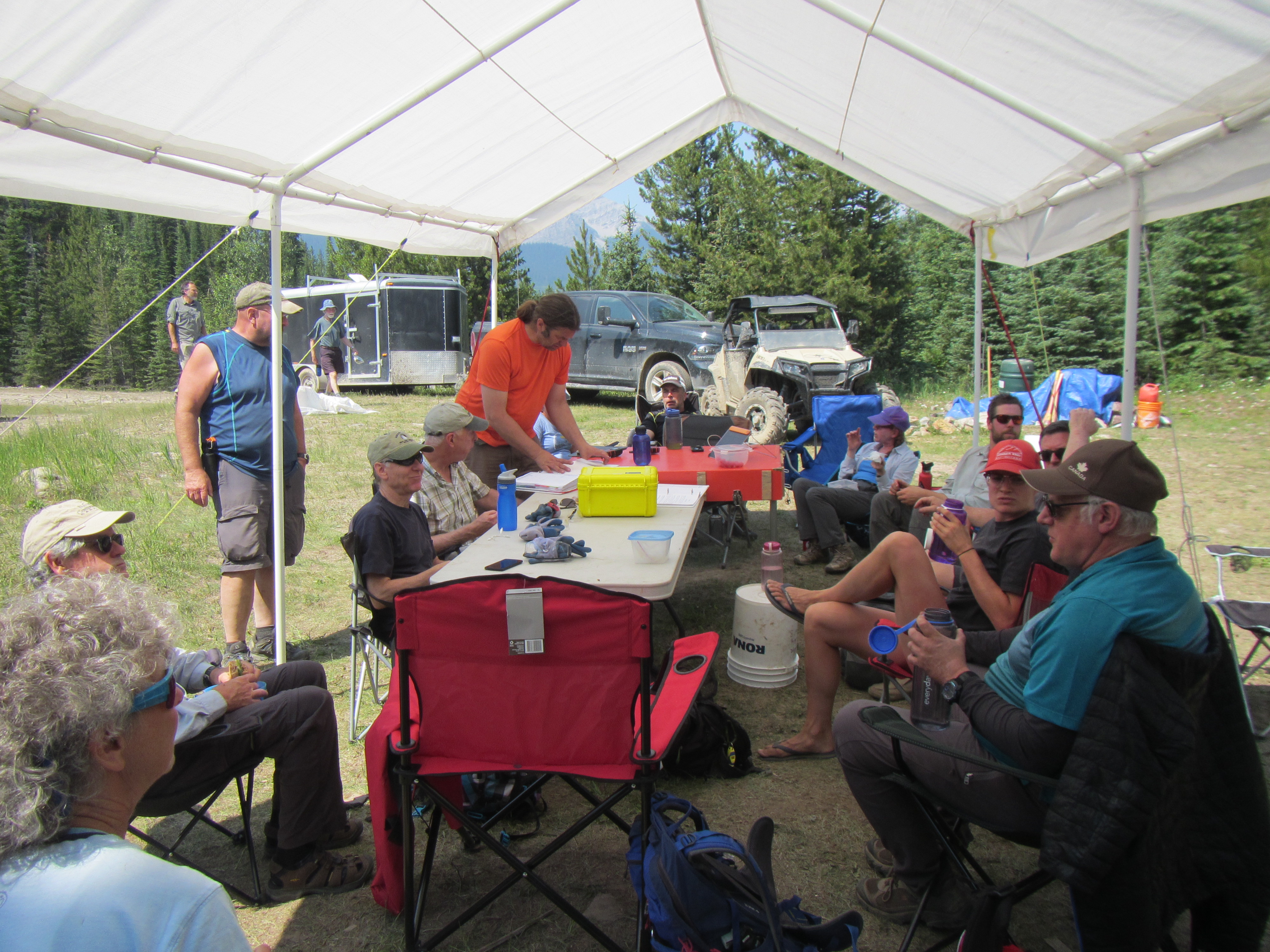
    The evenings were spent relaxing and story telling under the canopy and the crew was given a session on tying knots by Wayne, resident knot-tying expert. They all came away with a new appreciation of this skill. The final half day didn’t allow much time for trail building so most of the crew spent the morning hiking the trail built by last year’s crew, while a few crew members spent the day clearing and building a tricky switchback.

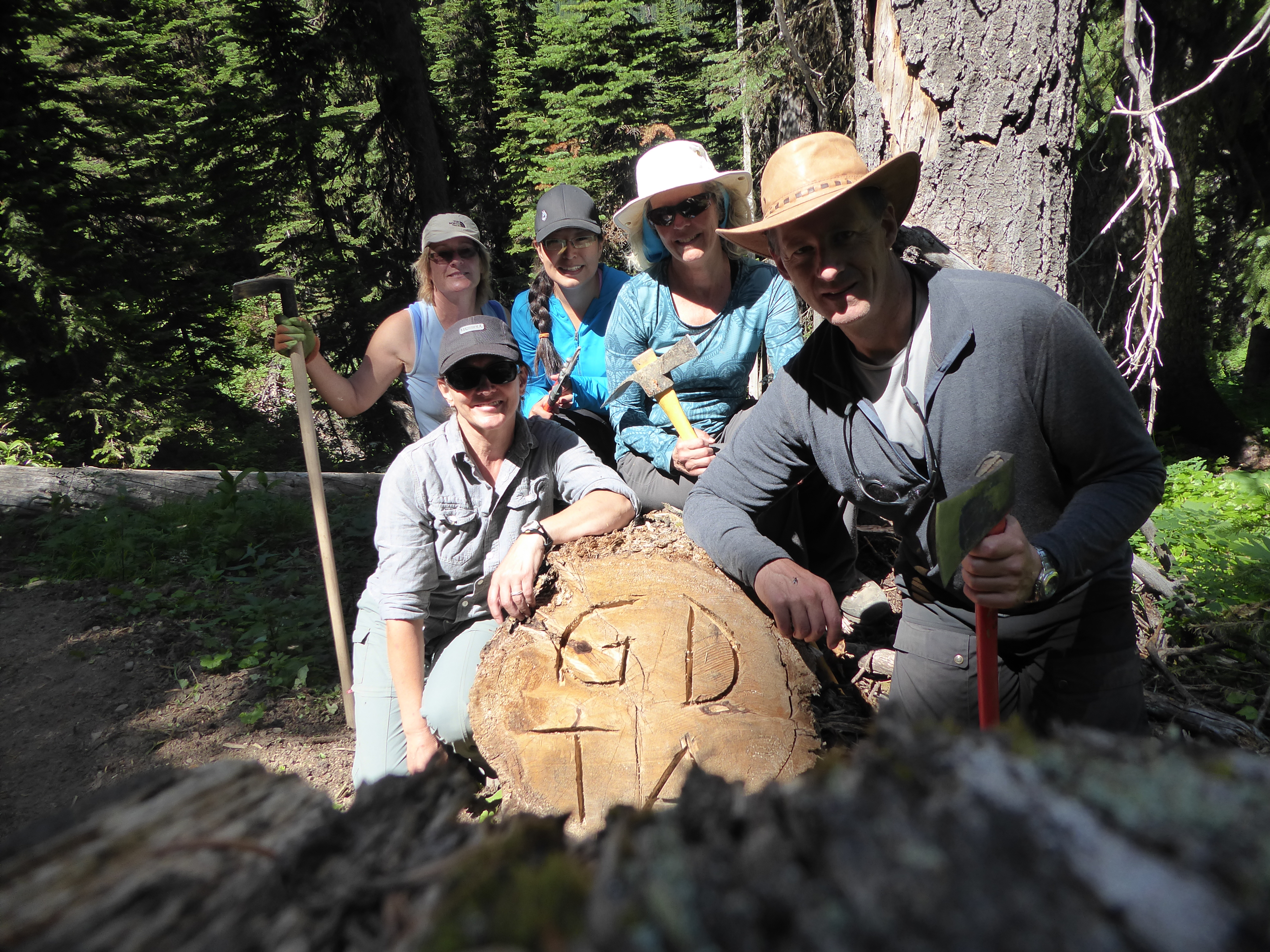
    A happy trail crew
    A happy trail crew

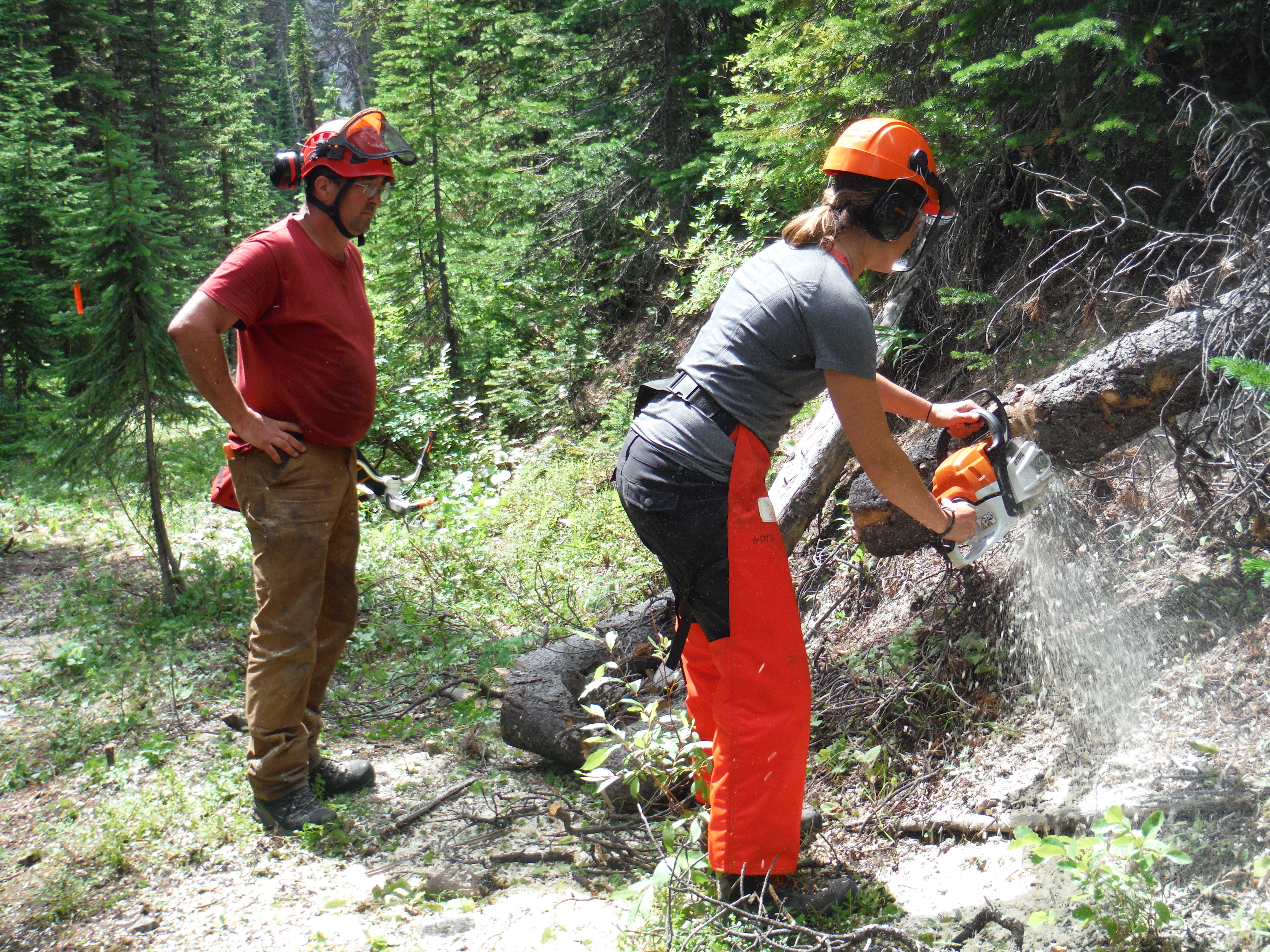
    When the new crew arrived at noon, both crews got together for a barbecue and get to know each other session. Then it was time for the first crew to head home. This left plenty of time for the new volunteers to get out to the work areas and get their training, orientation and a start on their work projects. Seeing the amazing job the first crew had done, this group got right into it with the hopes their work could be as good. Work continued on the main new trail work as well as the Fred bridge site and improvements on the previous rough cut route done last fall for the next three days. Many on both the first two crews received some valued chainsaw training from an expert sawyer. Scott not only instructed them on safety, but proper cutting and falling techniques as well as explaining the saws working parts, use and care.

    Chainsaw training
    Chainsaw training

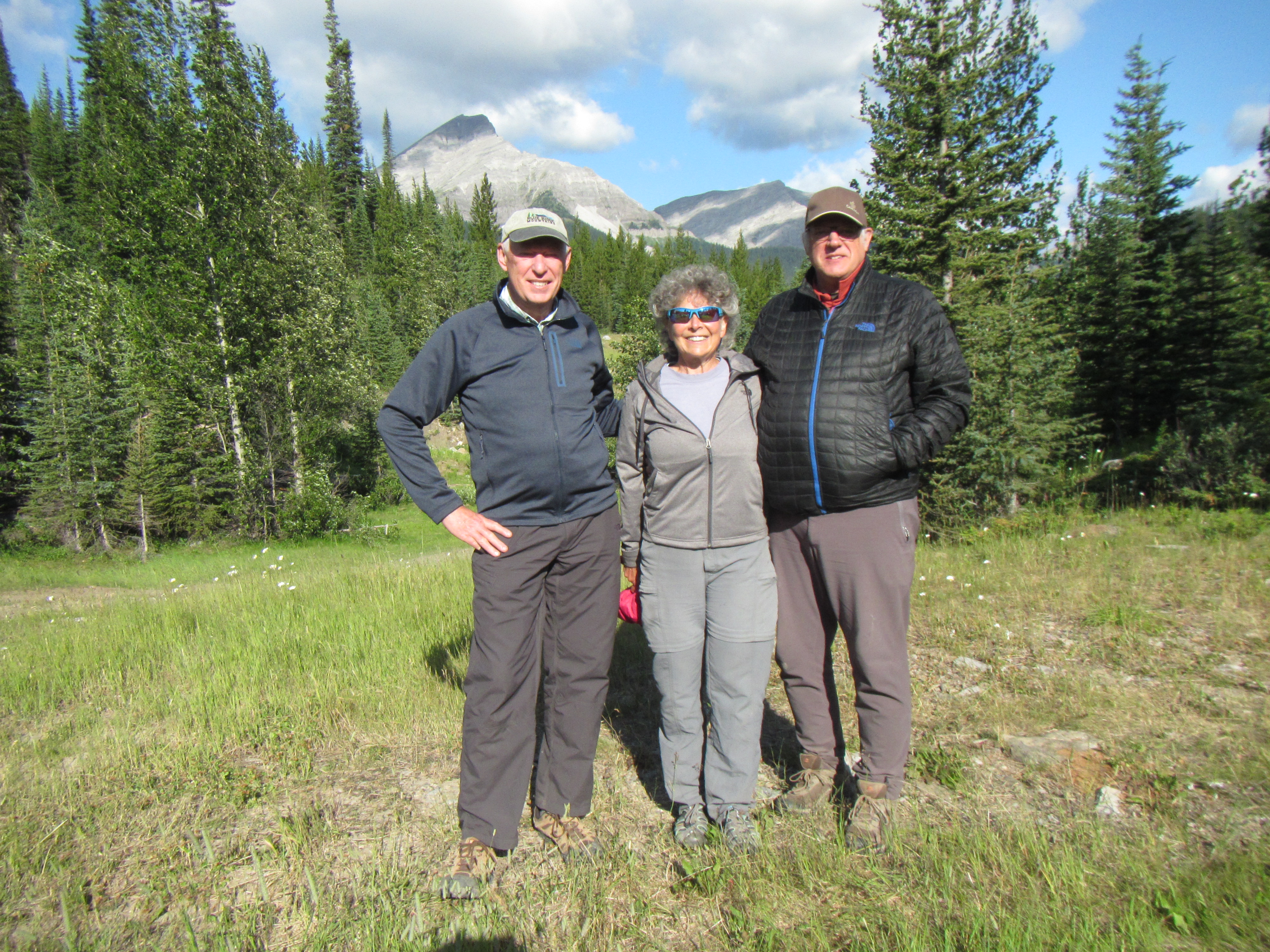
    During the day much knowledge of native plants and flowers was shared with the group by a crew member well studied in the field. It seemed like there was at least one outdoor plant expert on each of this year’s crews willing to share their knowledge and the other team members soaked it up. Back at camp each night, the crew members on this group were privileged to be in the company of three of the original GDT surveyors that had spent a full summer together in the early 1970’s scouting and laying down the original route. Their pictures and adventurous storytelling kept many of the team up way too late. This crew worked extremely hard during the day and at night bodies were sore. Luckily there was a yoga instructor among them and the nightly stretching sessions made getting out of bed the next morning an easier chore. This was a GDTA Signature Trip so all the food was supplied and meals planned. The well thought out meals were amazing, fresh, nutritious and plentiful. The cooks worked extremely hard preparing and managing this task as well as working side by side with the other crew members on the trail all day. Their energy and upbeat tempo inspired others on the crew.

    Original GDTA'ers Dave, Jenny and Lani
    Original GDTA’ers Dave, Jenny and Lani

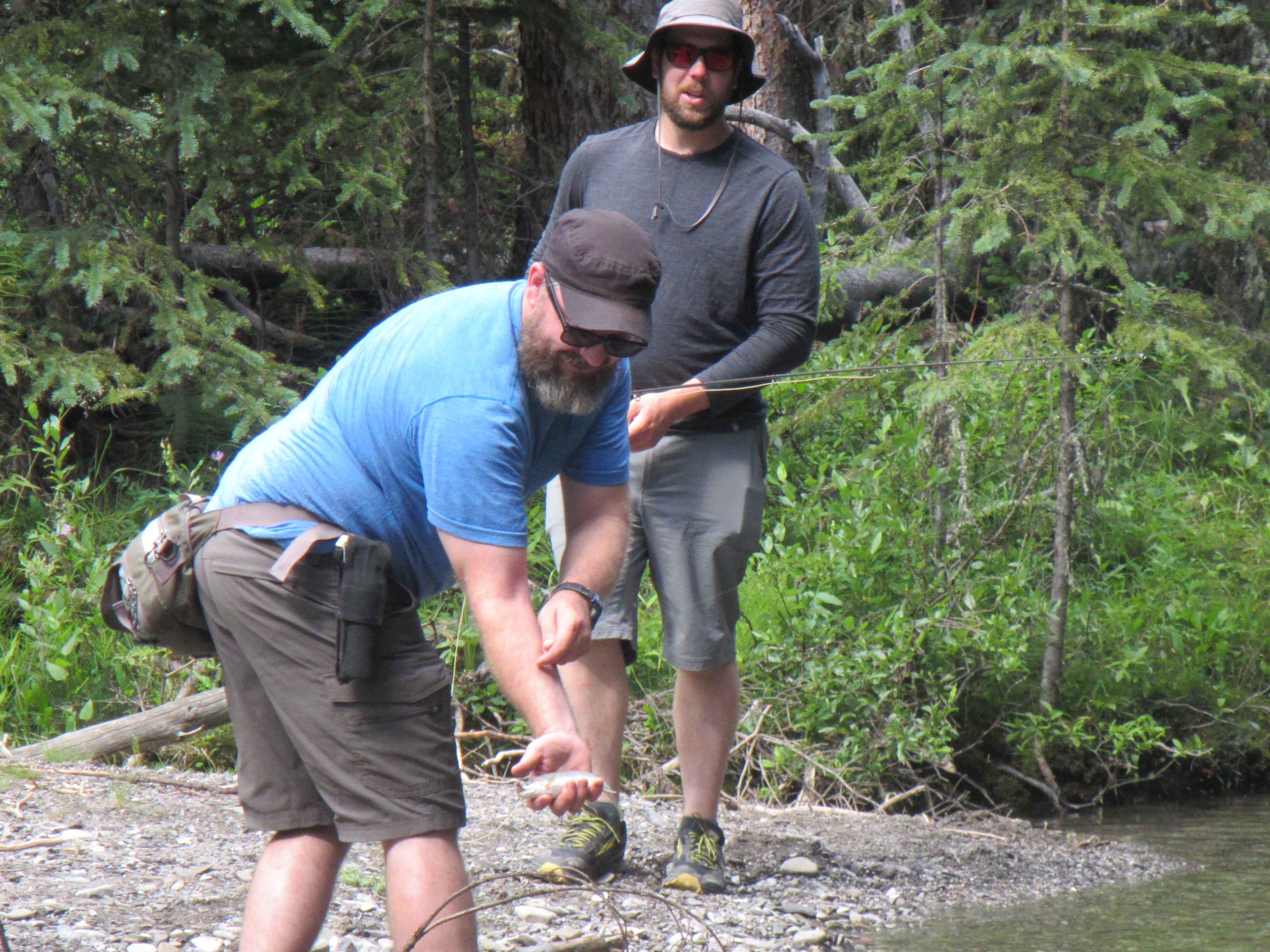
    On changeover day, the crew again split up with about half venturing out for a stroll on the 8 km of new finished and rough cut trail to see the totality of what had been done to date. Others found a great fishing spot on the creek and were given fly fishing tips. A half a dozen trout were caught and released.

    Fishing in the creek
    Fishing in the creek

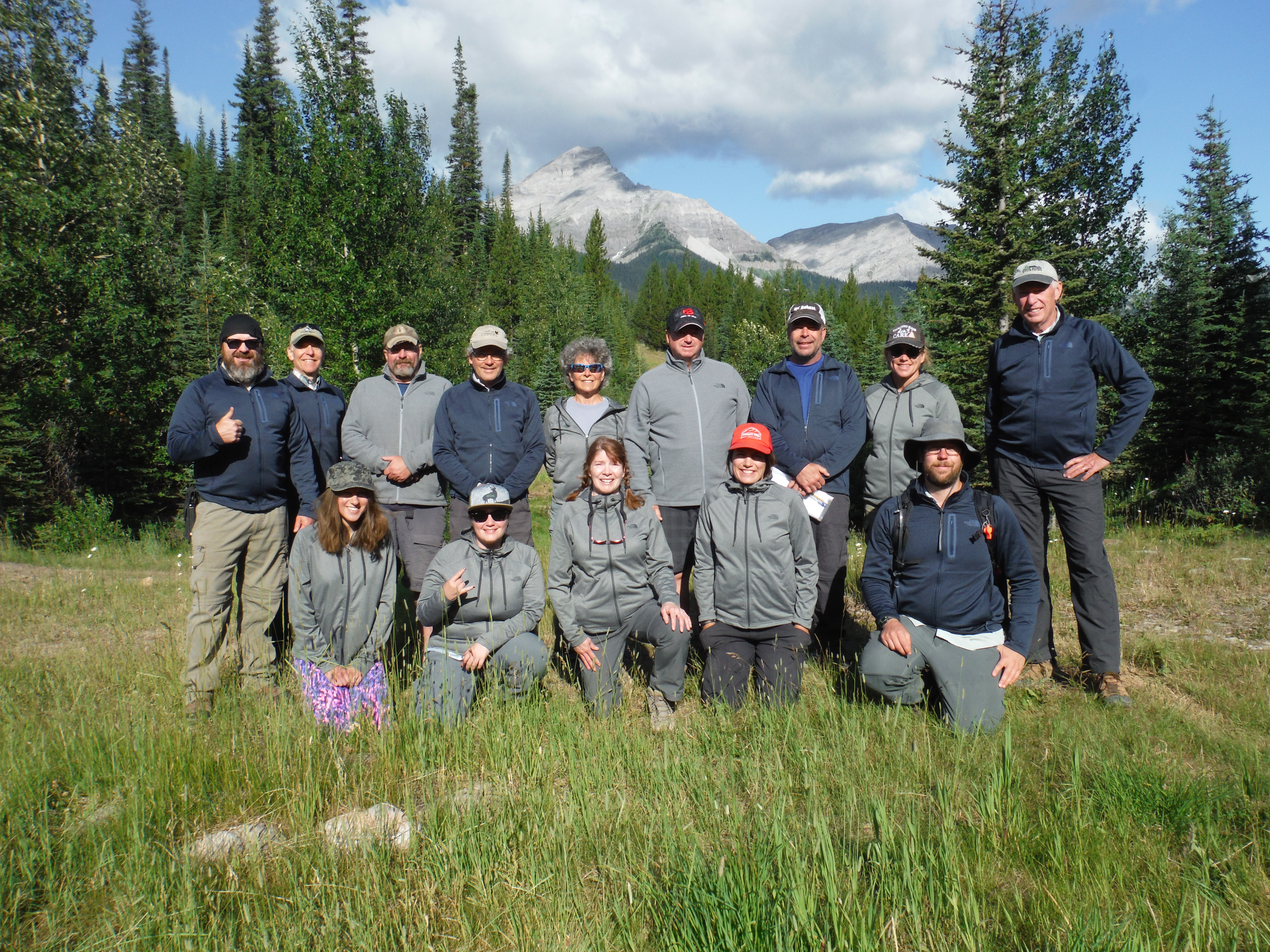
    At noon the final crew arrived from Calgary and another barbecue ensued. The boundless energy of the old crew seemed to rub off on the last team. After the second crew left, the new team headed out to their respective work sites to receive their instructions and get started. The new team was amazed at the quality of work done and how impressive the new trail looked. With new energy and enthusiasm they got their own projects underway.

    The GDTA Trail Crew in The North Face jackets
    The GDTA Trail Crew in The North Face jackets

    This group split into four crews, one started construction of the new bridge at the Dutch Creek / North Fork Pass junction, one to finish the tread work and put the finishing touches on the new section the other crews had cut through, one to finish tread work on rough cut 2016 trail, and the last were finishing a kilometre of trail that had just had the chainsaw crew go through.

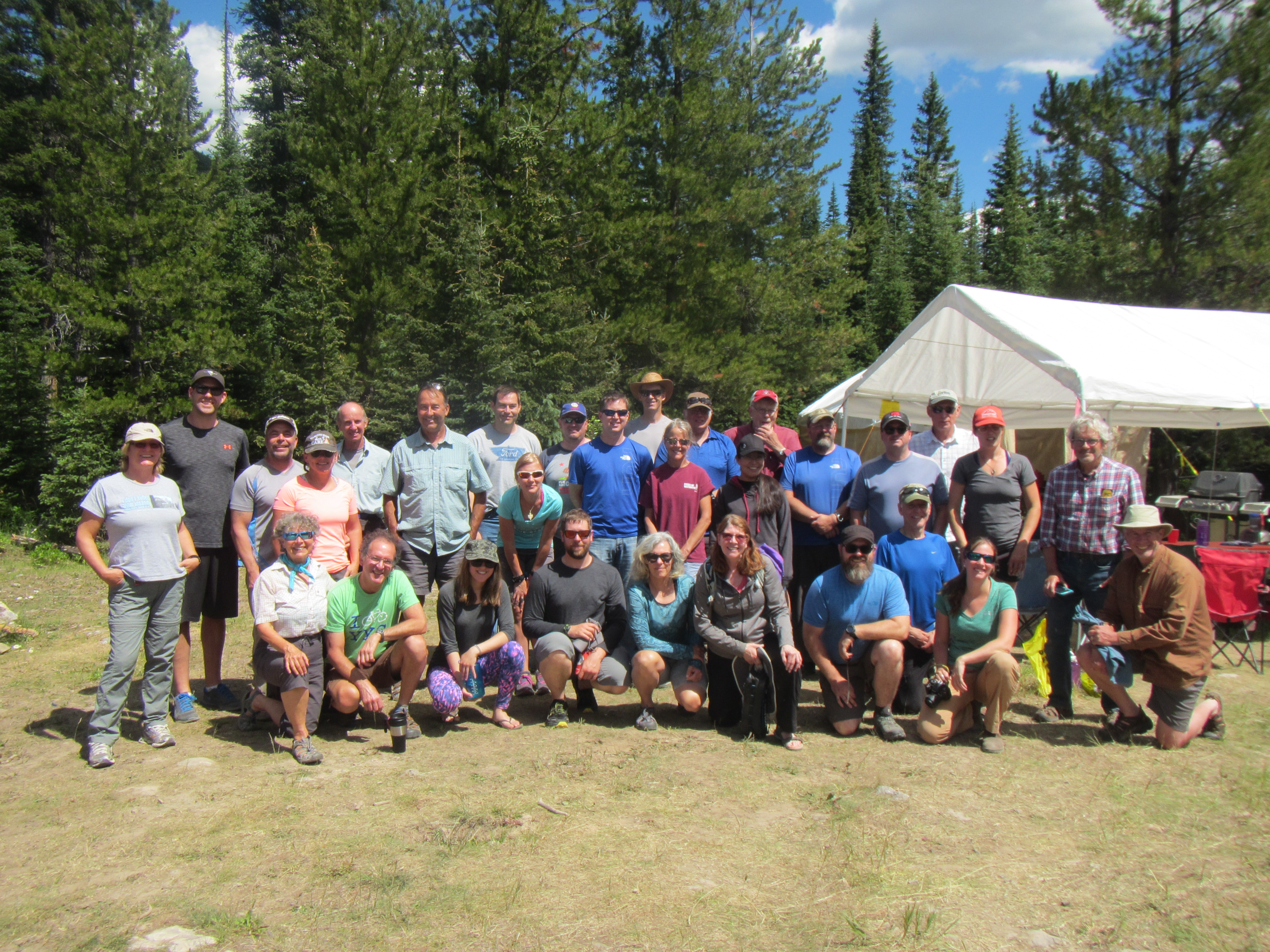
    GDTA Trail Crew
    GDTA Trail Crew

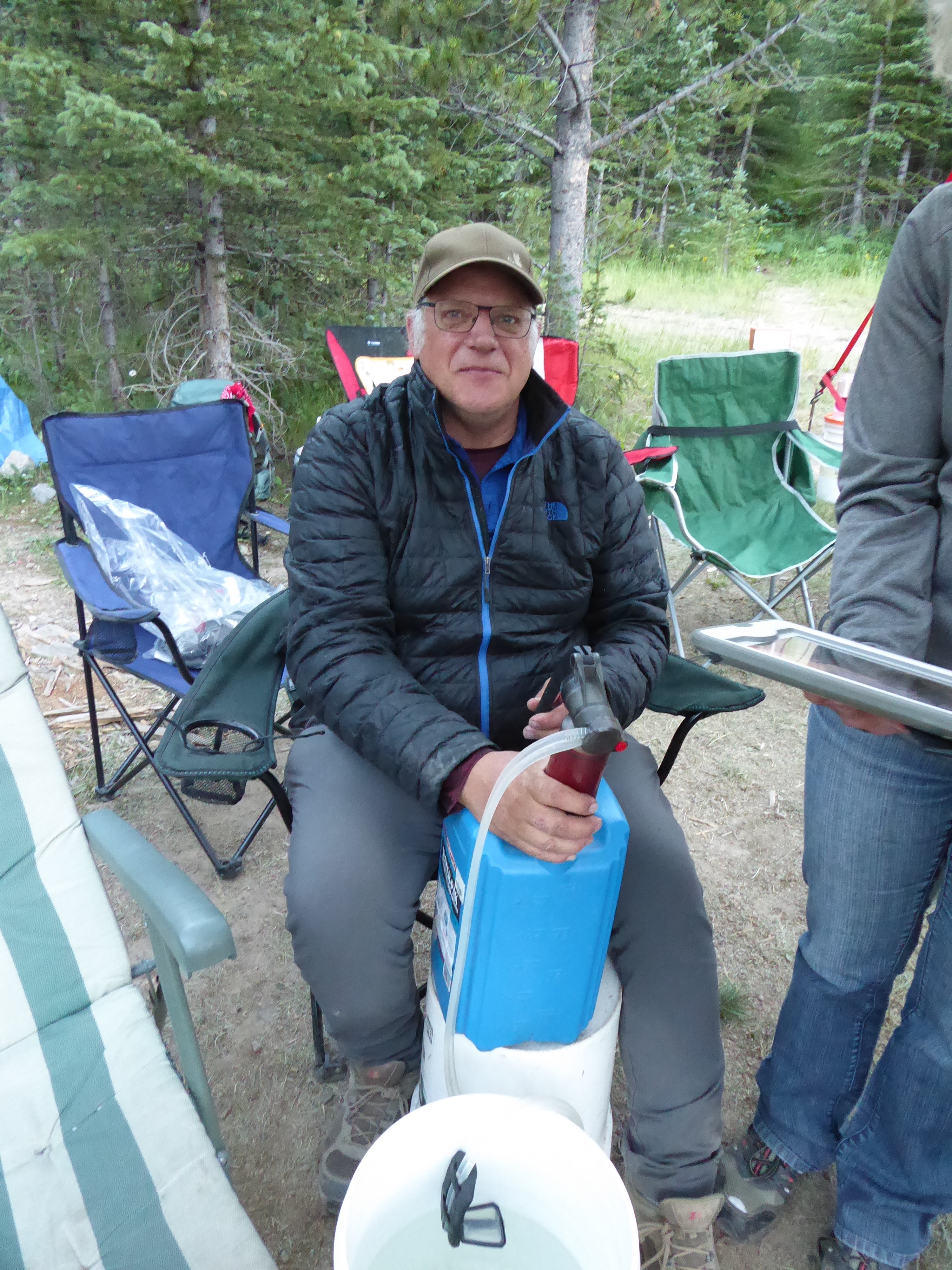
    All the crews worked through the hottest weather for the next four days, and they were all very thankful for Lani who remained at camp, filtering fresh water for them all day.

    Camp water, filtered by Lani
    Camp water, filtered by Lani

    At the end of the day, the teams met back at camp and were treated to fantastic meals organized and put together by Jocelyn, who had also spent her days digging new tread and trimming the overgrowth on the new trail before preparing the scrumptious feasts.

    Photo 2017-07-25
    Camp kitchen

    During the downtime at camp there were tons of activities taking place. One adventurous group spied a pool in the creek large enough to fully immerse themselves. Their screams were reportedly heard all the way across the BC border when they realized how ice cold the water was. For others relaxing in a lawn chair with a cold beverage was enough excitement after a long day with a Pulaski. There was creativity shown by this group also as one night, a number of them got together and Shannon taught them how to make dream weavers out of willow branches and other natural material from the area. They had a fine time as their merriment was heard well into the night. The time finally came to break camp. The last day was spent cleaning the campsite, breaking down equipment and packing it away. When they left you could hardly tell that 45 people had camped there for 12 days.

    Relaxing at camp
    Relaxing at camp

    One of the most fulfilling things on these trips was seeing how the team members who had never experienced trail building changed over the course of 3 or 4 days. At the start some were timid and could hardly swing a rogue hoe let alone a Pulaski or axe. By the time each team had ended their stay, everyone had become competent and confident trail builders. They all took great pride in their work and really enjoyed the transformation of wild forest to finely groomed trail tread.

    GDTA Trail Crews
    GDTA Trail Crews

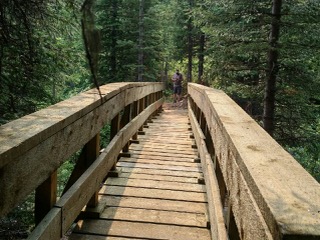
    August Bridge Build – The new “Fred” bridge was originally planned to be completed by the July crews. Unfortunately there was an equipment breakdown and helicoptering in the big span logs was delayed until the last work day for the crews. The sill work had been completed, the spans were set and all the boards and attaching hardware left at the site. All that was left to do was build the decking and railing. Two volunteers, Doug and Rick, were sent out over a long weekend to see if they could finish the bridge. Things got complicated a bit as an ATV ban for the area had just been put into place. Getting heavy tools and gear to the bridge site was the issue. Doug and Rick were able to fit everything in a wheelbarrow and backpacks and slowly worked the load up an old quad trail 3 km to the bridge site. Once at the site they proceeded to decipher the engineering plans and put the decking in place.

    IMG_0142

    The next day the posts and rails were cut to size and installed. There was a little trial and error involved and some of the installed pieces had to be disassembled and reinstalled for a better overall fit and finish. About halfway through on the second day the power supply’s ran out of juice and left Doug and Rick at a standstill. This meant they had to pack the rechargeable batteries all the way back to camp and use the generator to recharge them. It took nearly four hours to charge all of the batteries and it was late in the afternoon already. Not knowing how much more they would need the power drill, Doug and Rick walked back to the bridge site and worked late to get as much done as possible. The last day took them only a couple of hours to get the bridge complete and clean up the site. At the end of the day there was a lot of pride taken in the finished product. A great backcountry bridge that is second to none in strength and durability built with the help of Alberta Environment and Parks.

    Fred bridge
    Fred bridge

    September Scouting Trip – It was a last second scramble to get prepared and meet at Chinook Lake near Coleman for the four volunteers in this trip, as a month long backcountry ban had just been lifted. The notice was short but they all arrived on time. On the first day, Dave, Brad and Peter scouted and flagged a 16 km route from Window Mountain Lake down to Chinook Lake. They were thrilled by the great views of the Crowsnest Pass area as the trail is going to be mostly above treeline here. During this same time, Doug scrambled up to Window Mountain Lake to do some exploring. Window Mountain Lake is a high mountain cirque that will most assuredly be a highlight on the future trail.

    The next day they started southward from where the finished section of this year’s trail work ended. The day saw wet snow falling as they ascended the ridge and marked out 5 km of new trail. They were cold and wet at camp but were warmed by a propane fire back at camp. The last day was most memorable as fresh snow on the ground allowed them to see the plentiful tracks of a wolf pack as they followed 2 km up the ATV access route. Another thrill was the well defined and rather large grizzly prints as they re-entered the new trail corridor to do the final mapping. The snow had stopped but they were just as wet and cold at the end of the day from all the bushwhacking. That night around the fire a sense of satisfaction was felt as they now had flagged 5 km of new trail ready to be built next summer. See you all out there in 2018!

    Thank you! – Thanks go out to all of our hard-working volunteers who built or mapped the trail this year, and all the special people who spent countless hours over the winter months getting official authorizations, planning and making sure these trips go as smoothly as they do. Well done!

    Special thanks to our sponsors and partners: Alberta Environment and Parks, MEC, Teck, The North Face, and Stihl. Their generous donations and support were a huge part of our successful trail work in 2017.

     
  • October 2017 Trail and Road Conditions

    October 2017 Trail and Road Conditions

    Trail Conditions Update – October 23, 2017

    Fall colours are here, and so is the snow! Snow has fallen on most of the GDT and is accumulating at higher elevations. Expect snow above 1500 metres with wet, icy and slippery trail conditions, and wet and muddy sections at lower elevations with recent rainfall or snow melt. Heavy boots or cleats are recommended. Nighttime and early morning temperatures are below freezing, so be prepared for cold temperatures and shorter days when travelling into the backcountry this fall.

    TRAIL CLOSURES:

    • Due to the Kenow wildfire, all trails and backcountry campgrounds in Waterton Lakes National Park and Akamina Kishinena Provincial Park remain closed. The GDT is closed from the International Boundary (a1) to Sage Pass (a17). No detour is available.
    • Due to the Verdant Creek Wildfire, the GDT is closed from Citadel Pass (c13) to Sunshine Meadows (c15). Detour around the closure by leaving the GDT at Watridge Lake trail junction (c7) and rejoin the GDT at Sunshine Village (c15). 
    • The GDT will be closed from Four Point Campground (e15) to Signal Mountain Trailhead (e32) from November 1, 2017 to February 28, 2018, to prevent trails from facilitating an unnatural level of predator access to threatened woodland caribou.
    • Numa Creek Trail (Rockwall access trail) remains closed due to wash out of the bridge over the Vermilion River. 
    • Tumbling Creek Trail (Rockwall access trail) is closed from the Ochre Creek trail to the intersection of the Rockwall Trail before the Tumbling bridge due to a missing bridge at km 6.6.

    ELK RUTTING SEASON WARNING: It is elk rutting season. Warning signs that read “ATTENTION – Elk Mating” have been posted at areas where elk herds often gather. Be aware that bull elk become extremely aggressive during rutting season so keep at least 30 metres away from all elk and never get between a male and female elk.

    BEARS:  It’s pre-hibernation feeding season for both black and grizzly bears which increases the chances of running into a bear on the trail. It is easy to surprise a bear that is focussed on feeding so make noise while hiking in bear territory. Carry bear spray, watch for fresh bear signs, and if you see a bear, back away slowly and leave the area. Never run.

    TRAIL NOTICES:

    • From Scarpe Pass (a24), the trail disappears so hikers must route-find up to La Coulotte Ridge, where the hiking becomes significantly more difficult until you reach the ATV track (a27) heading down to the West Castle Road. 
    • A large avalanche has destroyed about 200 m of trail north of Dutch Creek campground, near Tornado Pass (b16). Hikers should traverse the scar area around the down slope side so as to avoid climbing over unstable fallen trees.
    • Leroy Creek has washed out approximately 100m of the trail obscuring the location of the creek ford. Look for cairns on either side of the creek marking the crossing.
    • There is a new bridge over the Upper Elk Lake outflow (b38) and a new bypass trail to Fox Lake and West Elk Pass just before the bridge.
    • A windstorm blew through Yoho National Park in July 2017 resulting in many blown down trees – On the Ottertail Trail, there are several debris fields with fallen trees across the trail near Goodsir Pass (c36). On the Amiskwi Trail, about 1 km from the trailhead (d1), there are dozens of trees blow down across the trail.
    • Cairnes Creek (d9): The bridge is washed out making this a potentially dangerous ford. There are 2 large trees down across the creek allowing hikers to cross. If these trees wash away, it is recommended to ford the creek early in the morning when glacial melt is lowest.
    • The damaged Lambe Creek bridge (d10) was removed in September 2015. It is recommended to ford the creek downstream.
    • The Howse Pass Trail from Conway Creek (d12) to the Glacier Lake trail junction (d14, 15 km) is in very poor condition. The trail is overgrown, with hundreds of wind-fallen trees across the trail. Hiking in the Howse River floodplain is a viable alternative if the Howse River is low enough to ford.
    • The Owen Creek Trail was cleared in July 2015 up to km 6 but there has been some new deadfall since then. Beyond that point, the trail is in poor shape with several washed out sections. Expect challenging hiking for 3 km including skirting along steep creek-side cliffs and rock-hopping in the creek itself. At km 6, do not take the trail heading up away from the creek (it is a deadend). Look for orange blazes marking the correct route staying near the creek.
    • The Maligne Pass trail in Jasper National Park has been decommissioned and is in poor shape. The trail from Pobokton Creek (e20) to Maligne Lake (e25, approx 42 km) is no longer being maintained by Parks Canada so expect deteriorating and overgrown trail conditions; long pants are recommended. The Maligne River bridge has been removed but the river can be easily forded in normal summer conditions (knee deep in mid-summer). Most other bridges are still in place. Read Nathan Dahl’s August 30, 2015 Maligne Pass trail update here. The Six Passes Route is a good alternative to the overgrown trail.
    • The Yates Torrent Bridge is out at the crossing of the Coleman Glacier outflow (near f16). Do not attempt to cross at the old bridge location. Instead, ford the Smoky River farther down the valley. Attempt to cross early in the morning when glacial melt is the lowest or be prepared for a fast and potentially dangerous creek ford.
    • The bridges across Gendarme and Carcajou Creeks are out on the Jasper North Boundary Trail. These two creeks are smaller than the Smoky River, but can still be treacherous. Cross Gendarme at the horse crossing just below the old bridge (marked), and Carcajou about 100m below the trail.
    • The bridge across Buchanan Creek on the trail to Kakwa Lake, has been removed. The crossing here can be hazardous early in the year or after heavy rains. 

    ACCESS ROADS:

    • Access to the northern terminus of the GDT in Kakwa Provincial Park is via the Walker Creek Forest Service Road. The Walker Creek FSR is uneven, rutted, slippery and rough, so 4WD/AWD high clearance vehicle is recommended. The last 10km from Bastille Creek to Buchanan Creek is closed due to washouts and is not driveable by vehicle so be prepared to walk this distance on foot.
  • September 2017 Trail and Road Conditions

    September 2017 Trail and Road Conditions

    Trail Conditions Update – September 26, 2017

    Cool, wet autumn weather has arrived in the Rockies. Expect fresh snowfall above 1700 metres and wet and muddy trail conditions. Be prepared for colder temperatures and shorter days when travelling on the trail this fall.

    WILDFIRES: With the recent wet and cool weather, fire danger ratings in the Canadian Rockies have improved considerably, but some trail closures and campfire bans are still in effect due to ongoing wildfire management. 

    TRAIL CLOSURES:

    • Due to the Kenow wildfire, all trails and backcountry campgrounds in Waterton Lakes National Park and Akamina Kishinena Provincial Park remain closed. The GDT is closed from the International Boundary (a1) to La Coulotte Ridge (a27). No detour is available at this time.
    • Mount Assiniboine Provincial Park, Banff National Park and Kootenay National Park have partial closures due to the Verdant Creek Wildfire. The GDT is closed from Og Lake (c11) to Sunshine Meadows (c15). Detour around the closure by leaving the GDT at Watridge Lake trail junction (c7) and rejoin the GDT at Sunshine Village (c15). 
    • Trail 7 near Jasper is closed to hikers south of the junction with Trail 7e and north of the junction with Trail 7a due to grizzly and black bears frequenting the area next to the golf course. Detour by taking Trail 7e towards Trefoil Lakes and Trail 7b south to Old Fort Point trailhead. Equestrian uses can still use Trail 7 but are not to dismount.
    • Numa Creek Trail (Rockwall access trail) remains closed due to wash out of the bridge over the Vermilion River. 
    • Tumbling Creek Trail (Rockwall access trail) is closed from the Ochre Creek trail to the intersection of the Rockwall Trail before the Tumbling bridge due to a missing bridge at km 6.6.

    CAMPFIRE BANS

    • A Fire Restriction and campfire ban is still in effect for Zones 1-3 of the Calgary Forest Area which includes all sections of the GDT in Alberta from Sage Pass (a17) to Beehive Natural Area (b24), inclusive. Where the GDT is still open, gas or propane stoves are still allowed in campgrounds.
    • For current information, check out Alberta Fire Bans or BC Wildfire Status websites.

    ELK RUTTING SEASON WARNING: It is elk rutting season until mid-October. Warning signs that read “ATTENTION – Elk Mating” have been posted at areas where elk herds often gather. Be aware that bull elk become extremely aggressive during rutting season so keep at least 30 metres away from all elk and never get between a male and female elk.

    BEARS:  It’s pre-hibernation feeding season for both black and grizzly bears which increases the chances of running into a bear on the trail. It is easy to surprise a bear that is focussed on feeding so make noise while hiking in bear territory. Carry bear spray, watch for fresh bear signs, and if you see a bear, back away slowly and leave the area. Never run.

    TRAIL NOTICES:

    • From Scarpe Pass (a24), the trail disappears up to La Coulotte Ridge and the hiking becomes significantly more difficult until you reach the ATV track (a27) heading down to the West Castle Road.
    • A large avalanche has destroyed about 200 m of trail north of Dutch Creek campground, near Tornado Pass (b16). Hikers should traverse the scar area around the down slope side so as to avoid climbing over unstable fallen trees.
    • There is a new bridge over the Upper Elk Lake outflow (b38) and a new bypass trail to Fox Lake and West Elk Pass just before the bridge.
    • To protect sensitive habitat and improve habitat security for grizzly bears, hiking or travel anywhere except on official trails or designated roads in the Sunshine Meadows, Citadel Pass, and Healy Pass areas of Banff National Park is prohibited. 
    • A windstorm blew through Yoho National Park in July resulting in many blown down trees – On the Ottertail Trail, there are several debris fields with fallen trees across the trail near Goodsir Pass (c36). On the Amiskwi Trail, about 1 km from the trailhead (d1), there are dozens of trees blow down across the trail.
    • Cairnes Creek (d9): The bridge is washed out making this a potentially dangerous ford. There are 2 large trees down across the creek allowing hikers to cross with dry feet. If these trees wash away, it is recommended to ford the creek early in the morning when glacial melt is lowest.
    • The damaged Lambe Creek bridge (d10) was removed in September 2015. It is recommended to ford the creek downstream.
    • The Howse Pass Trail from Conway Creek (d12) to the Glacier Lake trail junction (d14, 15 km) is in very poor condition. The trail is overgrown, with hundreds of wind-fallen trees across the trail. Hiking in the Howse River floodplain is a viable alternative if the Howse River is low enough to ford.
    • The Owen Creek Trail was cleared in July 2015 up to km 6. Beyond that point, the trail is in poor shape with several washed out sections. Expect challenging hiking for 3 km including skirting along steep creek-side cliffs and rock-hopping in the creek itself. At km 6, do not take the trail heading up away from the creek (it is a deadend). Look for orange blazes marking the correct route staying near the creek.
    • The Maligne Pass trail in Jasper National Park has been decommissioned and is in poor shape. The trail from Pobokton Creek (e20) to Maligne Lake (e25, approx 42 km) is no longer being maintained by Parks Canada so expect deteriorating and overgrown trail conditions; long pants are recommended. The Maligne River bridge has been removed but the river can be easily forded in normal summer conditions (knee deep in mid-summer). Most other bridges are still in place. Read Nathan Dahl’s August 30, 2015 Maligne Pass trail update here. The Six Passes Route is a good alternative to the overgrown trail.
    • The Yates Torrent Bridge is out at the crossing of the Coleman Glacier outflow (near f16). Do not attempt to cross at the old bridge location. Instead, ford the Smoky River farther down the valley. Attempt to cross early in the morning when glacial melt is the lowest or be prepared for a fast and potentially dangerous creek ford.
    • The bridges across Gendarme and Carcajou Creeks are out on the Jasper North Boundary Trail. These two creeks are smaller than the Smoky River, but can still be treacherous. Cross Gendarme at the horse crossing just below the old bridge (marked), and Carcajou about 100m below the trail.
    • The bridge across Buchanan Creek on the trail to Kakwa Lake, has been removed. The crossing here can be hazardous early in the year or after heavy rains. 

    ACCESS ROADS:

    • Access to the northern terminus of the GDT in Kakwa Provincial Park is via the Walker Creek Forest Service Road. The Walker Creek FSR is uneven, rutted, slippery and rough, so 4WD/AWD high clearance vehicle is recommended. The last 10km from Bastille Creek to Buchanan Creek is closed due to washouts and is not driveable by vehicle so be prepared to walk this distance on foot.
  • August 2017 Trail and Road Conditions

    August 2017 Trail and Road Conditions

    Trail Conditions Update – August 22, 2017

    WILDFIRES: Fire danger ratings in the Rockies are very high and trail closures and campfire bans are in effect. Wildfire smoke is occurring along much of the GDT and is causing poor air quality and reduced visibility. Read wildfire updates regularly and be cautious out there.

    • SECTION A TRAIL CLOSURES: Due to extreme fire hazard in Waterton Lake National Park, the GDT is closed from Rowe Meadow (a10) to the Blakiston Valley trail junction, and the Sage Pass Trail is also closed (a16 to a17). No detour is available at this time.
    • SECTION A CAMPGROUND CLOSURES: All backcountry campgrounds in Waterton Lake National Park and Akamina Kishinena Provincial Park are closed due to extreme fire hazard.
    • SECTION C TRAIL CLOSURES: Mount Assiniboine Provincial Park, Banff National Park and Kootenay National Park have partial closures due to the due to the Verdant Creek Wildfire. The GDT is closed from Og Lake (c11) to Citadel Pass (c13), and from Ball Pass Junction (c21) to Hawk Creek trailhead (c23). Detour around these closures is difficult but can be done by leaving the GDT at Watridge Lake trail junction (c7) or Allenby Pass junction (on the Assiniboine Pass alternate) and rejoin the GDT at the Floe Lake trailhead (c23). The GDT is open around Sunshine Village and Egypt Lake but cannot be hiked contiguously due to the closures north and south of Sunshine Village.

    CAMPFIRE BANS: Given the extremely high fire hazard, campfires are not recommended anywhere on the GDT until further notice. 

    • A campfire ban is in effect in all of BC, which includes all sections of the GDT in BC from Akamina Pass to Kakwa Lake. These prohibitions do not apply to cooking stoves that use gas or propane.
    • Due to the high fire hazard, backcountry and front country campfire bans are in effect in Banff, Jasper, Kootenay, Waterton Lakes and Yoho National Parks.
    • A Fire Restriction and campfire ban has been issued for the Calgary Forest Area which includes all sections of the GDT in Alberta from Sage Pass to North Kananaskis Pass, due to high fire hazard. Gas or propane stoves are still allowed in campgrounds and random camping areas.
    • For current information, check out Alberta Fire Bans or BC Wildfire Status websites.

    BEARS:  It’s berry season! Berry bushes border trails, roads and campgrounds on the GDT, and black and grizzly bears are feeding on berries right now. Be bear aware on the trails this summer, make noise and carry bear spray.

    TRAIL CLOSURES:

    • Waterton Lakes National Park: Rowe Lake Trail is closed due to grizzly bears feeding in the area.
    • Due to extreme fire hazard in Waterton Lake National Park, the GDT is closed from Rowe Meadow (a10) to the Blakiston Valley trail junction, and the Sage Pass Trail is also closed (a16 to a17). No detour is available at this time.
    • All backcountry campgrounds in Waterton Lake National Park and Akamina Kishinena Provincial Park are closed due to extreme fire hazard.
    • Mount Assiniboine Provincial Park, Banff National Park and Kootenay National Park have partial closures due to the due to the Verdant Creek Wildfire. The GDT is closed from Og Lake (c11) to Citadel Pass (c13), and from Ball Pass Junction (c21) to Hawk Creek trailhead (c23). Detour around these closures is difficult but can be done by leaving the GDT at Watridge Lake trail junction (c7) or Allenby Pass junction (on the Assiniboine Pass alternate) and rejoin the GDT at the Floe Lake trailhead (c23). The GDT is open around Sunshine Village and Egypt Lake but cannot be hiked contiguously due to the closures north and south of Sunshine Village.
    • Trail 7 near Jasper is closed to hikers south of the junction with Trail 7e and north of the junction with Trail 7a due to grizzly and black bears frequenting the area next to the golf course. Detour by taking Trail 7e towards Trefoil Lakes and Trail 7b south to Old Fort Point trailhead. Equestrian uses can still use Trail 7 but are not to dismount.
    • Numa Creek Trail (Rockwall access trail) remains closed due to wash out of the bridge over the Vermilion River. 
    • Tumbling Creek Trail (Rockwall access trail) is closed from the Ochre Creek trail to the intersection of the Rockwall Trail before the Tumbling bridge due to a missing bridge at km 6.6.

    TRAIL NOTICES:

    • From Scarpe Pass (a24), the trail disappears up to La Coulotte Ridge and the hiking becomes significantly more difficult until you reach the ATV track (a27) heading down to the West Castle Road.
    • There is a new bridge over the Upper Elk Lake outflow (b38) and a new bypass trail to Fox Lake and West Elk Pass just before the bridge.
    • To protect sensitive habitat and improve habitat security for grizzly bears, hiking or travel anywhere except on official trails or designated roads in the Sunshine Meadows, Citadel Pass, and Healy Pass areas of Banff National Park is prohibited. 
    • Cairnes Creek (d9): The bridge is washed out making this a potentially dangerous ford. There are 2 large trees down across the creek allowing hikers to cross with dry feet. If these trees wash away, it is recommended to ford the creek early in the morning when glacial melt is lowest.
    • The damaged Lambe Creek bridge (d10) was removed in September 2015. It is recommended to ford the creek downstream.
    • The Howse Pass Trail from Conway Creek (d12) to the Glacier Lake trail junction (d14, 15 km) is in very poor condition. The trail is overgrown, with hundreds of wind-fallen trees across the trail. Hiking in the Howse River floodplain is a viable alternative if the Howse River is low enough to ford.
    • The Owen Creek Trail was cleared in July 2015 up to km 6. Beyond that point, the trail is in poor shape with several washed out sections. Expect challenging hiking for 3 km including skirting along steep creek-side cliffs and rock-hopping in the creek itself. At km 6, do not take the trail heading up away from the creek (it is a deadend). Look for orange blazes marking the correct route staying near the creek.
    • The Maligne Pass trail in Jasper National Park has been decommissioned and is in poor shape. The trail from Pobokton Creek (e20) to Maligne Lake (e25, approx 42 km) is no longer being maintained by Parks Canada so expect deteriorating and overgrown trail conditions; long pants are recommended. The Maligne River bridge has been removed but the river can be easily forded in normal summer conditions (knee deep in mid-summer). Most other bridges are still in place. Read Nathan Dahl’s August 30, 2015 Maligne Pass trail update here. The Six Passes Route is a good alternative to the overgrown trail.
    • The Yates Torrent Bridge is out at the crossing of the Coleman Glacier outflow (near f16). Do not attempt to cross at the old bridge location. Instead, ford the Smoky River farther down the valley. Attempt to cross early in the morning when glacial melt is the lowest or be prepared for a fast and potentially dangerous creek ford.
    • The bridges across Gendarme and Carcajou Creeks are out on the Jasper North Boundary Trail. These two creeks are smaller than the Smoky River, but can still be treacherous. Cross Gendarme at the horse crossing just below the old bridge (marked), and Carcajou about 100m below the trail.
    • The bridge across Buchanan Creek on the trail to Kakwa Lake, has been removed. The crossing here can be hazardous early in the year or after heavy rains. 

    ACCESS ROADS:

    • Due to extreme fire hazard, recreational use of off-road vehicles is prohibited on all Crown lands in southwest BC and southeast Alberta.
    • A travel advisory is in effect for Highway 93 South from Castle Junction to Radium. Fire fighters will be working adjacent to the highway and reduced speed zones will be in place. Drivers should anticipate possible delays.
    • Access to the northern terminus of the GDT in Kakwa Provincial Park is via the Walker Creek Forest Service Road. The Walker Creek FSR has been repaired from Highway 16 to km 33.5. While travelling the remaining 40 kilometres on the Walker Creek FSR, attention is required to navigate the surface as it is uneven, rutted, slippery and very rough. 4WD/AWD high clearance vehicle is recommended. The last 10km from Bastille Creek to Buchanan Creek is closed due to washouts and is not driveable by vehicle so be prepared to walk this distance on foot.
  • July 2017 Trail and Road Conditions

    July 2017 Trail and Road Conditions

    Trail Conditions Update – July 29, 2017

    Summer is in full swing on the Great Divide which means alpine wildflowers are blooming and wildfires are burning in some areas.

    Trails are mostly bare and dry, with some snow patches at higher elevations. Warm weather means rapid snow and ice melt during the day resulting in high water levels and potentially dangerous creek crossings, so attempt to ford larger creeks early in the day when water levels are lowest.

    WILDFIRES: Fire danger ratings in the Rockies are very high and trail closures and campfire bans are in effect. Wildfire smoke is occurring along much of the GDT and is causing poor air quality and reduced visibility. Read wildfire updates regularly and be cautious out there.

    • TRAIL CLOSURE: Banff National Park, Kootenay National Park and Mount Assiniboine Provincial Park all have trail closures due to the due to the Verdant Creek Wildfire. The GDT is closed from Og Lake campground (c11) to Sunshine Meadows. Detour around the closure by leaving the GDT at Watridge Lake trail junction (c7) or Allenby Pass trail junction on the Assinibone Pass alternate route (noting that access is restricted to groups of 4 or more on the Allenby Pass Trail). Hikers can return to the GDT at Sunshine Village (c15). Sunshine Village is open.
    • A campfire ban is in effect in all of BC, which includes all sections of the GDT in BC from Akamina Pass to Kakwa Lake. These prohibitions do not apply to cooking stoves that use gas or propane.
    • Due to the high fire hazard, backcountry and front country campfire bans are in effect in Banff, Jasper, Kootenay, Waterton Lakes and Yoho National Parks.
    • A Fire Restriction and campfire ban has been issued for the Calgary Forest Area which includes all sections of the GDT in Alberta from Sage Pass to North Kananaskis Pass, due to high fire hazard. Gas or propane stoves are still allowed in campgrounds and random camping areas.
    • Given the extremely high fire hazard, campfires are not recommended anywhere on the GDT until further notice. 
    • For current information, check out Alberta Fire Bans or BC Wildfire Status websites.

    BEARS:  Berry bushes border trails, roads and campgrounds on the GDT, and black and grizzly bears are feeding on berries right now. Be bear aware on the trails this summer, make noise and carry bear spray.

    • Jasper National Park – Bears are frequenting the area around the Signal Fire Road on the north end of the Skyline Trail, so be extra cautious when travelling in that area, make noise and carry bear spray.

    TRAIL CLOSURES:

    • Banff National Park, Kootenay National Park and Mount Assiniboine Provincial Park all have trail closures due to the due to the Verdant Creek Wildfire. The GDT is closed from Og Lake campground (c11) to Sunshine Meadows. Detour around the closure by leaving the GDT at Watridge Lake trail junction (c7) or Allenby Pass trail junction on the Assinibone Pass alternate route (noting that access is restricted to groups of 4 or more on the Allenby Pass Trail). Hikers can return to the GDT at Sunshine Village (c15). Sunshine Village is open.
    • Trail 7 near Jasper is closed to hikers south of the junction with Trail 7e and north of the junction with Trail 7a due to grizzly and black bears frequenting the area next to the golf course. Detour by taking Trail 7e towards Trefoil Lakes and Trail 7b south to Old Fort Point trailhead. Equestrian uses can still use Trail 7 but are not to dismount.
    • Numa Creek Trail (Rockwall access trail) remains closed due to wash out of the bridge over the Vermilion River. 
    • Tumbling Creek Trail (Rockwall access trail) is closed from the Ochre Creek trail to the intersection of the Rockwall Trail before the Tumbling bridge due to a missing bridge at km 6.6.

    TRAIL NOTICES:

    • From Scarpe Pass (a24), the trail disappears up to La Coulotte Ridge and the hiking becomes significantly more difficult until you reach the ATV track (a27) heading down to the West Castle Road.
    • There is a new bridge over the Upper Elk Lake outflow (b38) and a new bypass trail to Fox Lake and West Elk Pass just before the bridge.
    • To protect sensitive habitat and improve habitat security for grizzly bears, hiking or travel anywhere except on official trails or designated roads in the Sunshine Meadows, Citadel Pass, and Healy Pass areas of Banff National Park is prohibited. 
    • The Rockwall Trail is still experiencing early season conditions and is recommended for experienced backpackers only who are prepared for hiking through a variety of hazards and obstacles including snow over steep slopes over Tumbling Pass (c30), avalanche debris across the trail in various locations and fording Helmet Creek by heading upstream from the bridge location (the creek is just above knee deep – bring a rope for a safer crossing).
    • Cairnes Creek (d9): The bridge is washed out making this a potentially dangerous ford. There are 2 large trees down across the creek allowing hikers to cross with dry feet. If these trees wash away, it is recommended to ford the creek early in the morning when glacial melt is lowest.
    • The damaged Lambe Creek bridge (d10) was removed in September 2015. It is recommended to ford the creek downstream.
    • The Howse Pass Trail from Conway Creek (d12) to the Glacier Lake trail junction (d14, 15 km) is in very poor condition. The trail is overgrown, with hundreds of wind-fallen trees across the trail. Hiking in the Howse River floodplain is a viable alternative if the Howse River is low enough to ford.
    • The Owen Creek Trail was cleared in July 2015 up to km 6. Beyond that point, the trail is in poor shape with several washed out sections. Expect challenging hiking for 3 km including skirting along steep creek-side cliffs and rock-hopping in the creek itself. At km 6, do not take the trail heading up away from the creek (it is a deadend). Look for orange blazes marking the correct route staying near the creek.
    • The Maligne Pass trail in Jasper National Park has been decommissioned and is in poor shape. The trail from Pobokton Creek (e20) to Maligne Lake (e25, approx 42 km) is no longer being maintained by Parks Canada so expect deteriorating and overgrown trail conditions; long pants are recommended. The Maligne River bridge has been removed but the river can be easily forded in normal summer conditions (knee deep in mid-summer). Most other bridges are still in place. Read Nathan Dahl’s August 30, 2015 Maligne Pass trail update here. The Six Passes Route is a good alternative to the overgrown trail.
    • The Yates Torrent Bridge is out at the crossing of the Coleman Glacier outflow (near f16). Do not attempt to cross at the old bridge location. Instead, ford the Smoky River farther down the valley. Attempt to cross early in the morning when glacial melt is the lowest or be prepared for a fast and potentially dangerous creek ford.
    • The bridges across Gendarme and Carcajou Creeks are out on the Jasper North Boundary Trail. These two creeks are smaller than the Smoky River, but can still be treacherous. Cross Gendarme at the horse crossing just below the old bridge (marked), and Carcajou about 100m below the trail.
    • The bridge across Buchanan Creek on the trail to Kakwa Lake, has been removed. The crossing here can be hazardous early in the year or after heavy rains. 

    ACCESS ROADS:

    • Akamina Parkway is open.
    • Access to the northern terminus of the GDT in Kakwa Provincial Park is via the Walker Creek Forest Service Road. The Walker Creek FSR has been repaired from Highway 16 to km 33.5. While travelling the remaining 40 kilometres on the Walker Creek FSR, attention is required to navigate the surface as it is uneven, rutted, slippery and very rough. 4WD/AWD high clearance vehicle is recommended. The last 10km from Bastille Creek to Buchanan Creek is closed due to washouts and is not driveable by vehicle so be prepared to walk this distance on foot.
  • November 2016 Trail and Road Conditions

    November 2016 Trail and Road Conditions

    Trail Conditions Update – November 1, 2016

    Winter is coming! Fresh snow has fallen on most of the GDT. Expect snow at higher elevations with wet, icy and slippery trail conditions, and wet and muddy sections at lower elevations with recent rainfall or snow melt. Nighttime and morning temperatures are below freezing, and significant snow is accumulating at higher elevations. Be prepared for early winter weather conditions when travelling into the backcountry this fall.

    SEASONAL CLOSURES:

    • Jasper National Park: The GDT is closed from Four Point Campground to Signal Mountain Trailhead from November 1, 2016 to February 28, 2017, to prevent trails from facilitating an unnatural level of predator access to threatened woodland caribou.
    • Peter Lougheed Visitor Information Centre is under a seasonal closure from October 11 until November 17, 2016.

    BEAR WARNINGS:

    • Jasper National Park – Two grizzly bears are frequenting the area between Nigel Pass and Maligne Pass. The bears have broken into cabins along the South Boundary trail to access horse feed. While they are no longer appearing at the cabins and have not shown aggression to people, they may return to the area. Pay extra attention when hiking in the area, make noise, and carry bear spray.

    TRAIL NOTICES:

    Early winter conditions exist so be prepared and pack accordingly. Snowshoes or cleats/spikes, and poles are recommended.

    • The trail from Sage Pass (a17) to Scarpe Pass (a24) was cleared and blazed in August 2014 and is in good shape. From Scarpe Pass, the trail disappears up to La Coulotte Ridge and the hiking becomes significantly more difficult until you reach the ATV track (a27) heading down to the West Castle Road.
    • The Aldridge Creek Trail between Fording River Pass (b31) and the Kananaskis Power Line Road (b32) was cleared and restored in July 2015.
    • Cairnes Creek (d9): The bridge is washed out making this a potentially dangerous ford. It is recommended to cross early in the morning when glacial melt is lowest.
    • The damaged Lambe Creek bridge (d10) was removed in September 2015. It is recommended to ford the creek farther downstream and cross early in the morning when glacial melt is lowest.
    • The Howse Pass Trail from Conway Creek (d12) to the Glacier Lake trail junction (d14, 15 km) is in very poor condition. The trail is overgrown, with hundreds of wind-fallen trees across the trail. Hiking in the Howse River floodplain is a viable alternative if the Howse River is low enough to ford.
    • The Owen Creek Trail was cleared in July 2015 up to km 6. Beyond that point, the trail is in poor shape with several washed out sections. Expect challenging hiking for 3 km including skirting along steep creek-side cliffs and rock-hopping in the creek itself. At km 6, do not take the trail heading up away from the creek (it is a deadend). Look for orange blazes marking the correct route staying near the creek.
    • The trail from Pinto Pass (e5) to Pinto Lake (e6) was cleared and blazed in August 2016. A new toilet and bear hang were installed at the Pinto Lake North (main) campground.
    • The Maligne Pass trail in Jasper National Park has been decommissioned and is in poor shape. The trail from Pobokton Creek (e20) to Maligne Lake (e25, approx 42 km) is no longer being maintained by Parks Canada so expect deteriorating and overgrown trail conditions; long pants are recommended. The Maligne River bridge has been removed but the river can be easily forded in normal summer conditions (knee deep in mid-summer). Most other bridges are still in place. Read Nathan Dahl’s August 30, 2015 Maligne Pass trail update here.
    • The trail from Colonel Pass (f9) to Upright Creek (f12) was cleared and blazed in August 2016. The trail has been moved back to the east side of the Moose River between Colonel Creek and Upright Creek and the ford of Upright Creek is marked. Colonel Creek campground (f11) has been restored.
    • The Yates Torrent Bridge is out at the crossing of the Coleman Glacier outflow (near f16). Do not attempt to cross at the old bridge location. Instead, ford the Smoky River farther down the valley. Attempt to cross early in the morning when glacial melt is the lowest or be prepared for a fast and potentially dangerous creek ford.
    • The bridges across Gendarme and Carcajou creeks are out on the Jasper North Boundary Trail. These two creeks are smaller than the Smoky River, but can still be treacherous. Cross Gendarme at the horse crossing just below the old bridge. Carcajou can be forded where the trail crosses the creek, unless the water level is high, then cross about 100m below the trail.
    • The trail north of Jackpine Pass (f21) all the way to Kakwa Pass (f42), is not marked and frequently disappears in meadows and boggy river valleys. Follow the GPS track to stay on route.
    • The bridge across Buchanan Creek, near the Kakwa Lake trailhead, has been removed. The crossing here can be hazardous early in the year or after heavy rains. In 2015, a gravel bar about 50 metres across the creek upstream provided the best crossing. The 10 km of road from Buchanan Creek to Bastille Creek is closed to vehicles as it is no longer driveable due to washouts so be prepared to walk this distance on foot.

    ACCESS TRAILS:

    ACCESS ROADS:

    Winter conditions exist on many mountain highways and roads. Roads can be snowy and icy so check for the latest conditions before you travel and carry chains and/or winter tires. For more information, check out Alberta 511 and Drive BC.
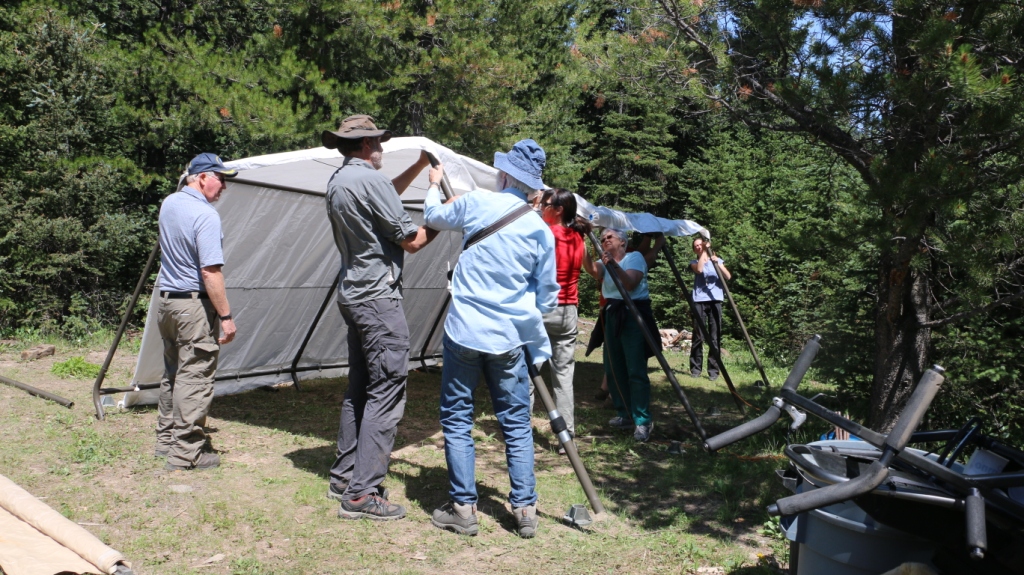
    • Highway 40 will be seasonally closed from Peter Lougheed Provincial Park to Highwood House beginning December 1.
    • Forestry Trunk Road 940 will be seasonally closed south of Cataract Creek and northwest of Plateau Mountain Road beginning December 1.
    • Access to the northern terminus of the GDT in Kakwa Provincial Park is via the Walker Creek Forest Service Road. The Walker Creek FSR has been repaired from Highway 16 to km 33.5. While travelling the remaining 40 kilometres on the Walker Creek FSR, attention is required to navigate the surface as it is uneven, rutted and slippery. The road is not recommended for anything other than a 4×4 high clearance vehicle. The last 10 km from Bastille Creek to Buchanan Creek is closed due to washouts and is not driveable by vehicle so be prepared to walk this distance on foot.